Travel Tips
What To Do When Your Travel Plans Change
Cancellations, missed connections and the order in which to make phone calls.
By Elena Marchetti · 20 February 2026 · 10 min read
Travel Tips
Cancellations, missed connections and the order in which to make phone calls.
By Elena Marchetti · 20 February 2026 · 10 min read

A trip runs on the assumption that the schedule holds. Most of the time it does. But flights get delayed, trains get cancelled, hotels overbook, storms close airports, and occasionally someone gets sick far from home. None of this is exotic; it is closer to the ordinary background risk of independent travel. What separates a bad day from a ruined trip is usually not the disruption itself but the order in which you respond to it.
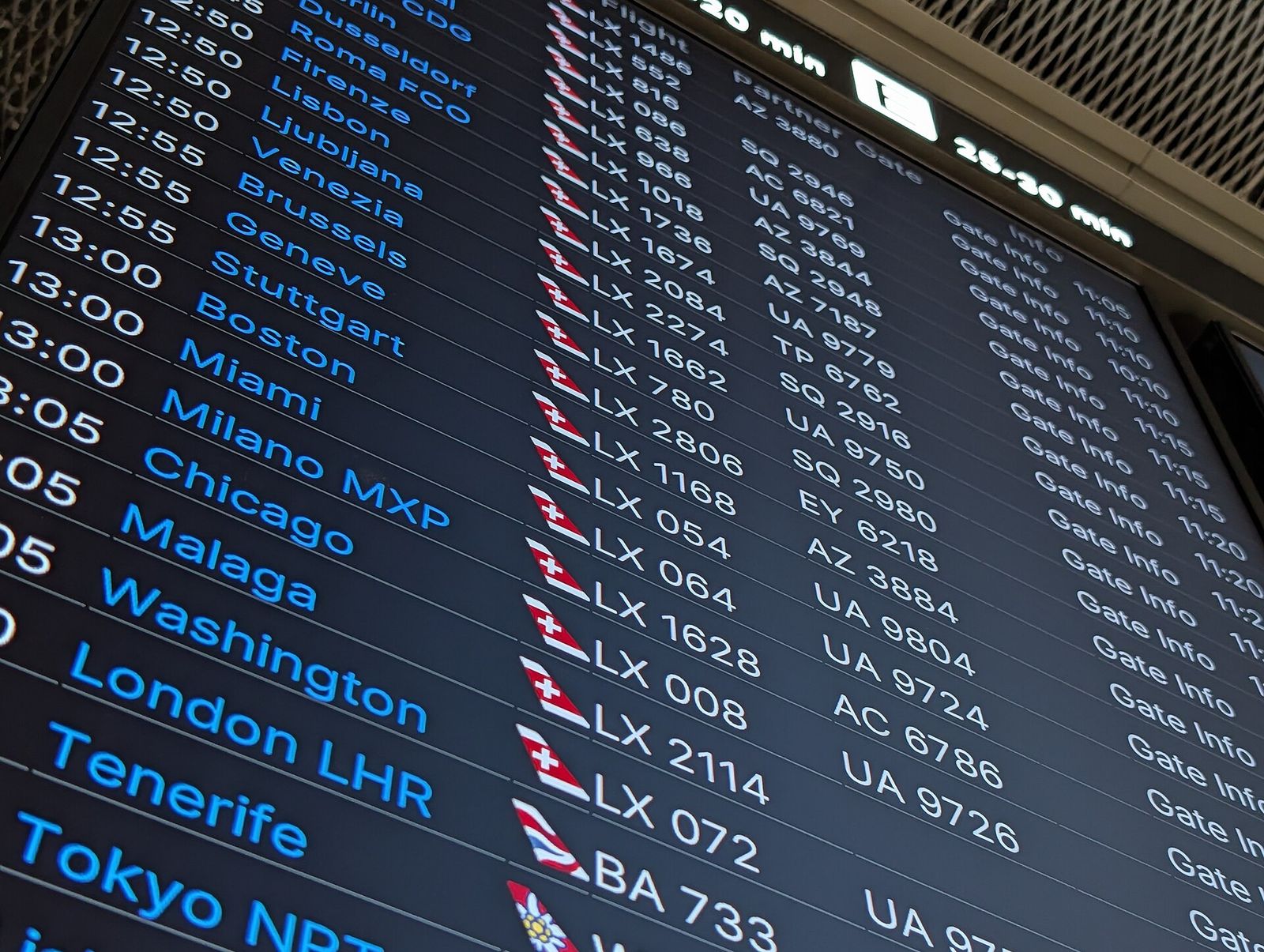
Before joining any queue, check the operator's own app or the airport or station departure board directly. Gate agents and phone agents are often working from the same system you can see on your phone, and airport screens update faster than rumors traveling down a queue. A flight marked delayed on the app might already show a new gate or a revised departure time that changes your next move entirely. For rail travel in Europe, the operator's app (SNCF Connect for France, Trenitalia or Italo for Italy, DB Navigator for Germany) usually reflects strikes and disruptions faster than station staff can relay them in person, and it is worth checking before you even leave the hotel.
When a flight is cancelled or a connection is missed, the rebooking desk line can run to an hour or more, especially if a whole bank of flights was affected by the same weather system or technical issue. Join that line, but also call the airline's phone line or use its app chat function at the same time. Whichever channel reaches a human first wins, and there is no penalty for resolving it twice; simply take whichever booking comes through and let the other channel know you are sorted. This applies equally to hotel front desks during a citywide event or overbooking situation: the desk queue and the phone line to the hotel's own reservations department are not the same queue, and calling ahead while walking over can save real time.
Whatever gets you rebooked, ask for it in writing, whether that is an emailed confirmation, a screenshot of a new boarding pass, or a written note with an agent's name and a reference number. Keep your original booking reference even after a rebooking, since claims for compensation, refunds or expenses often need to trace back to the original disrupted booking rather than only the replacement one. Photograph departure boards showing a delay or cancellation, keep any receipts for meals, hotels or transport you had to pay for because of the disruption, and keep boarding passes, even used ones, until well after the trip. None of this guarantees a claim will succeed, but the absence of it usually guarantees one will not.
This is where people waste the most time, usually by calling the wrong party first. The general rule: contact whoever holds the contract for the specific thing that broke.
Frankfurt Airport (FRA) is a common connection point for flights between the Americas and Asia or Africa, and its layout means a tight connection can genuinely be missed even when both flights land and depart roughly on time. What happens next depends heavily on ticketing. If both flights are on a single ticket, even across two different airlines in the same alliance, the airline is generally responsible for getting you to your final destination and will typically rebook you onto the next available flight, sometimes providing a hotel and meals if the delay stretches overnight; policies and what counts as a qualifying delay vary, so confirm the specific terms with the airline at the time. If the two flights were booked as separate tickets, perhaps to save money by combining a budget carrier with a full-service one, the connecting airline has no obligation to you at all if you miss the second flight, because as far as they are concerned you simply did not show up. This is the single biggest reason travel guides caution against splitting a tight connection across separate tickets purely to save on fare; read more on how this works in how airline fares actually work and in airport connections before booking a complex routing.
Strikes affecting SNCF are a recurring feature of French rail travel, sometimes announced days in advance and sometimes escalating with little warning. When a strike is called, SNCF typically publishes a reduced service plan on its app and website in advance, showing which trains will run. If your booked train is one of the cancelled services, SNCF generally allows a free exchange to another train or a refund, but the process and deadlines can change year to year, so check the current published policy rather than assuming last year's rules apply. Practical steps: check SNCF Connect the evening before and again the morning of travel, since the published plan can shift; if your train is cancelled, rebook through the app rather than waiting to argue it out at the station counter, since gare staff will be dealing with a large volume of affected travelers at once; and if the whole day's service is disrupted, look at whether a bus, a shared car service, or simply delaying the trip by a day is more realistic than chasing a seat on one of the few trains still running. General background on how European rail networks are structured is in train travel across Europe.
Typhoon season in Japan, roughly August through October with regional variation, can shut down flights into Naha (Okinawa) or the Osaka airports (Kansai International and Itami) with a day or two of advance warning as the storm track becomes clearer, or occasionally on shorter notice. Airlines usually announce waivers ahead of a confirmed typhoon impact, allowing free date changes without the usual fee, sometimes before the storm has even arrived. Check the airline's own typhoon or weather advisory page rather than general news, since the waiver terms (which dates qualify, how long you have to rebook) are set by the airline and can differ between carriers serving the same route. If you are already in Okinawa or Osaka when a typhoon is forecast, treat it as a genuine possibility that flights will not run for a day or two either side of the storm, and avoid booking anything tightly timed, including onward international connections, during that window.
It happens more often than travelers expect: you arrive at a booked hotel to find it closed for renovation, sold, or simply overbooked with no room actually available despite a confirmed reservation. If you booked directly with the hotel, ask immediately, in person, what alternative they are arranging, since many properties in this situation will place you at a comparable hotel nearby at their cost, at least for the first night. If you booked through a platform, contact the platform's support line from the lobby, phone in hand, since a same-day, walked-in guest with no room is exactly the kind of case those platforms prioritize, and they may be able to secure and pay for an alternative faster than you can negotiate one yourself standing at an unstaffed front desk. Keep every message and note the time of each interaction; if you end up paying out of pocket for a replacement room, keep that receipt for a refund claim afterward. General guidance on choosing accommodation types and what to expect from each is in hotels, guesthouses and apartments.
A genuine medical emergency abroad changes the priority order: get appropriate care first, documentation second. Contact your travel insurer's emergency assistance line as early as practical, since many insurers require notification during the event, or within a short window afterward, to approve certain costs, and some can coordinate directly with local hospitals or arrange evacuation if needed. Keep every medical receipt, discharge summary and prescription, since claims typically require itemized documentation rather than a lump total. If the illness forces you to cancel or cut short parts of the trip, that is usually a separate claim category (trip interruption) from the medical treatment itself, and insurers generally want both documented. If you did not buy insurance for the specific trip, a domestic health plan sometimes provides limited emergency coverage abroad, but this varies enormously by country and plan and should be checked before travel, not during a crisis. Background on preparing for this kind of situation is covered in before you go.
Not every plan change is a disruption forced on you; sometimes you simply want to shift a trip earlier or later. The mechanics are usually more forgiving than people assume, particularly for flexible or semi-flexible fares, but the cost of a voluntary change (a fare difference, a change fee, or both) is entirely different from an airline-caused disruption, where such fees are typically waived. Check the fare rules attached to your specific ticket, since a change that is nearly free on one fare class can cost close to the ticket's full value on another, and this is set at time of booking, not negotiable after the fact.
It is tempting to assume a fixed amount is owed whenever a flight is delayed by a certain number of hours, or whenever a hotel fails to honor a booking, but the reality is that entitlements depend on the specific jurisdiction the disruption falls under, the individual carrier's own conditions of carriage, and the exact ticket or fare type purchased. Rules that apply to flights departing the European Union, for instance, are not the same as rules governing a domestic flight in another region, and a low-cost ticket may carry different terms than a full-service one even on the same route. Rather than asserting a specific number of hours or a specific payout here, the honest guidance is to look up the current, published rules for your specific route, carrier and ticket type at the time of the disruption, since these rules are updated periodically and vary by circumstance in ways a general guide cannot responsibly summarize.

Denied boarding, which happens when a flight is oversold and the airline needs volunteers or must bump passengers involuntarily, follows a similar logic: procedures and any compensation owed depend on the jurisdiction and carrier, and airlines are generally required to ask for volunteers before bumping anyone involuntarily. If you are asked to volunteer, it is worth asking exactly what is being offered (cash, a future travel voucher, the next confirmed flight time, and whether a hotel is included) before agreeing, since offers can sometimes be improved by asking rather than accepting the first figure announced at the gate.
The common thread across every scenario here is speed paired with documentation. Acting fast without keeping records leaves you unable to claim anything after the fact, and keeping meticulous records without acting fast leaves you at the back of a queue that fills up within minutes of any major disruption. Do both, in that order, and most disrupted trips end up as an inconvenient story rather than a lasting financial loss.
Travel Tips
A budget that survives contact with the trip: daily rates, fixed costs and a buffer.
8 min read
Travel Tips
One anchor per day, and why the gaps end up being the memorable part.
10 min read
Travel Tips
The avoidable errors that cost first-time travellers money, time and sleep.
7 min read