How To Get There
Train Travel Across Europe: Routes Worth Knowing
The continent's most useful rail corridors, and where a train genuinely beats a flight.
By Elena Marchetti · 8 April 2026 · 8 min read
How To Get There
The continent's most useful rail corridors, and where a train genuinely beats a flight.
By Elena Marchetti · 8 April 2026 · 8 min read
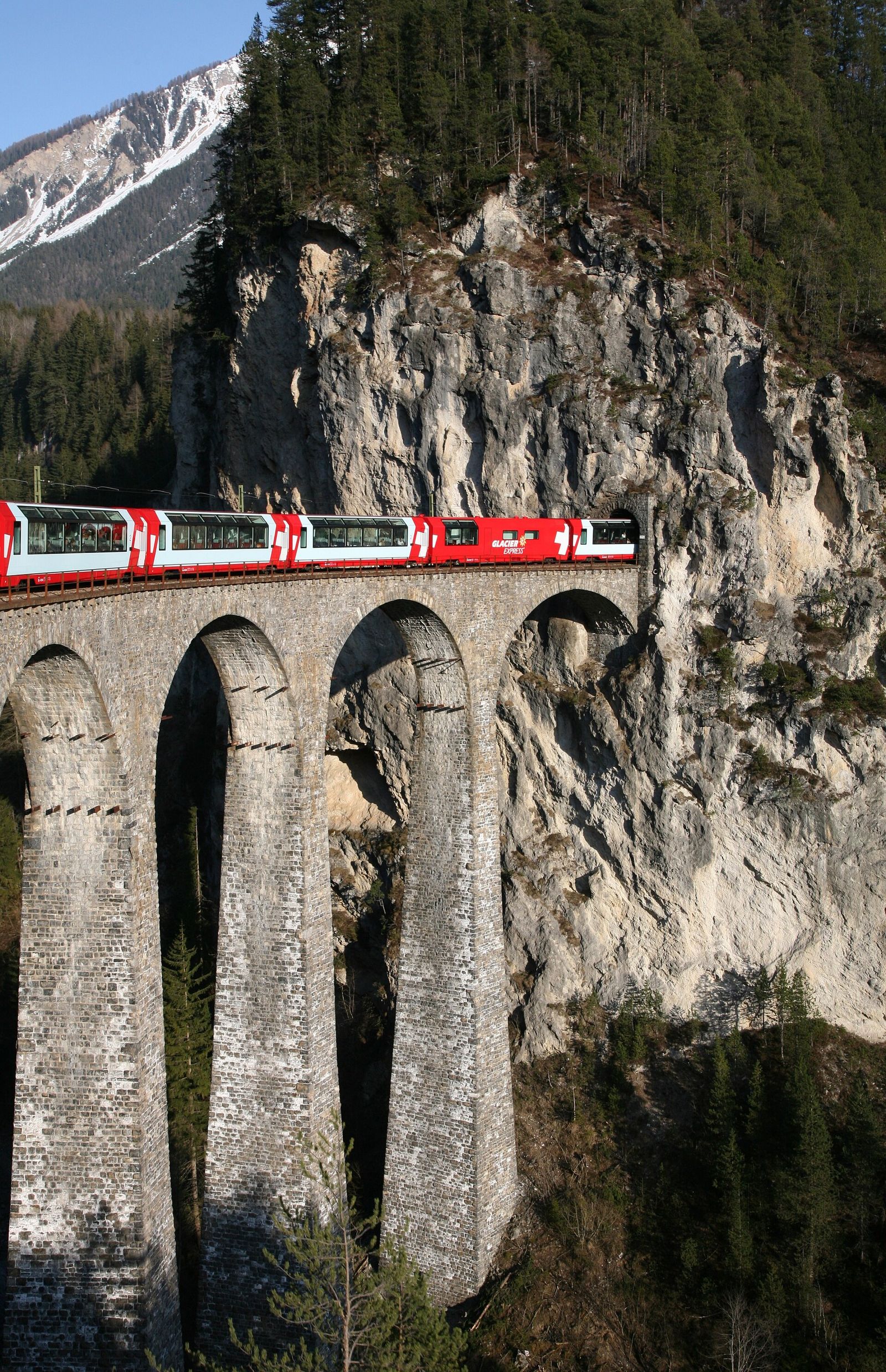
There is a particular satisfaction in walking out of a European train station straight into the middle of a city you have come to see, no shuttle bus, no thirty-minute taxi queue, no security theatre. That is the case for the corridors below, all of which get used often enough by regular travelers that they are worth knowing by name rather than rediscovering fresh each time a trip comes up. Prices, journey times and specific booking windows mentioned here should be read as typical patterns rather than current fact, since operators revise timetables and fares regularly.
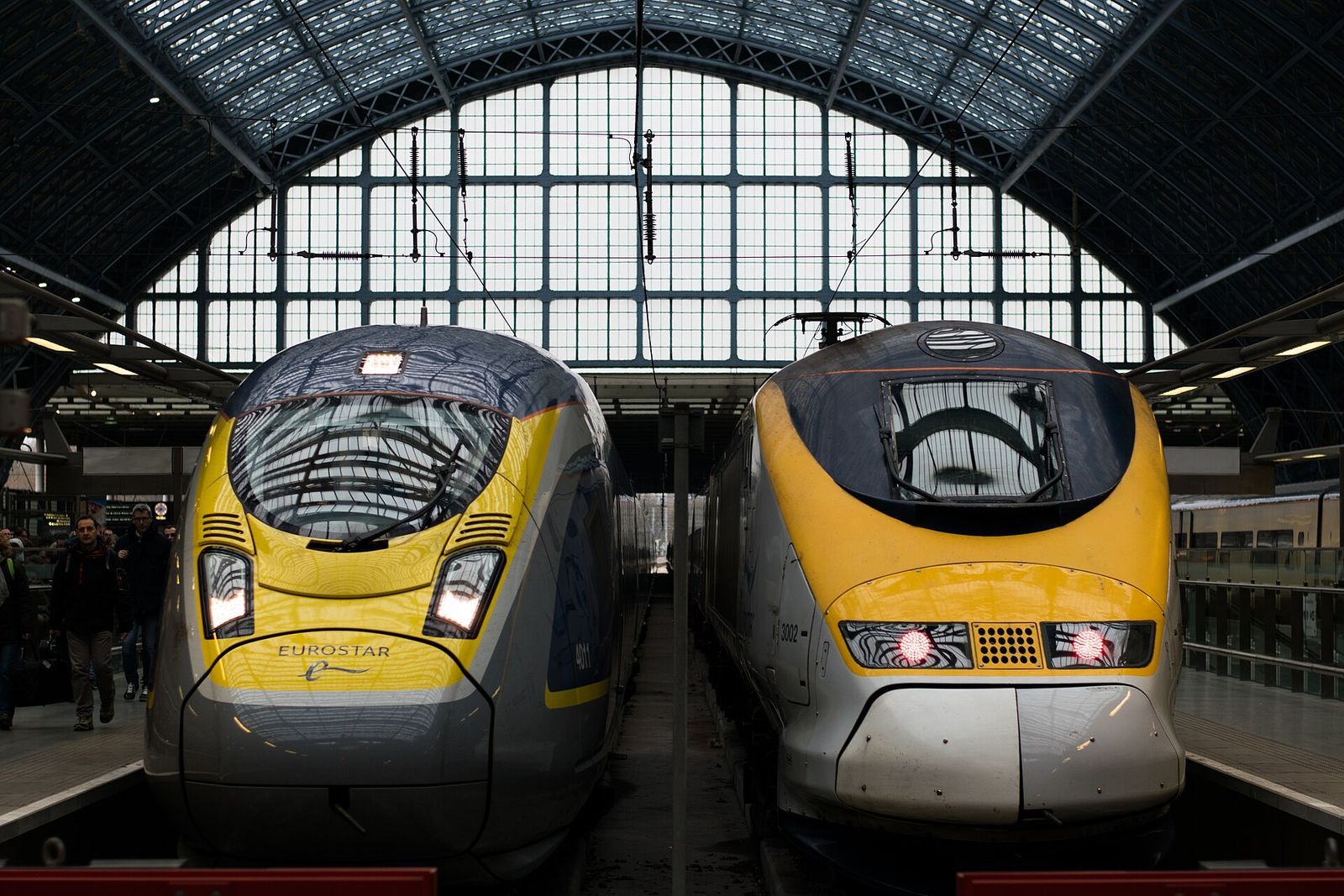
Eurostar's flagship route runs from London St Pancras International through the Channel Tunnel to Paris Gare du Nord in around two hours and fifteen minutes, and the two stations sit almost dead center of their respective cities, St Pancras a short walk from King's Cross and the British Library, Gare du Nord a few metro stops from the Marais. The journey includes UK border checks on the London side before boarding, which adds to the effective time budget beyond the scheduled travel time, so allowing at least 45 to 60 minutes before departure at St Pancras is the sensible habit rather than the bare minimum printed on the ticket.
From Paris, the same broad network extends toward Brussels Midi in roughly ninety minutes, historically operated as a Thalys service before that brand merged into the wider Eurostar operation, and onward to Amsterdam Centraal in a little under three and a half hours from Paris, or about two hours direct from Brussels. Brussels Midi itself functions as the hinge of this whole northern European cluster, with connections fanning out toward Cologne and beyond. None of these journey times are guaranteed to stay fixed as infrastructure work and new rolling stock change what is possible on the line, but the pattern, city center to city center in roughly the time it takes to get through a single airport security queue, has held for years.
Germany's ICE network handles the Frankfurt to Cologne corridor in about an hour and change on the fastest services, running on a dedicated high-speed line through the Rhine-Main region rather than following the slower river route further south. It is a genuinely useful business and leisure link, and Cologne's Hauptbahnhof deposits you directly beneath the cathedral, one of the more dramatic station exits anywhere on the continent.
Further south, the Munich to Salzburg run takes around ninety minutes through Bavarian countryside and crosses into Austria almost without ceremony, useful both as a standalone day trip and as the first leg of a longer journey toward Vienna. Austria's Railjet trains then carry that momentum onward, and the Vienna to Budapest Keleti route, at roughly two and a half hours, has become one of Central Europe's more popular rail links precisely because it avoids the low-cost carrier scramble of flying between two capitals that are, in real terms, closer together than many domestic flight routes. Vienna's Hauptbahnhof and Budapest's Keleti station both sit within easy reach of their historic cores, which matters more than it sounds like it should when you are hauling luggage after a long day.
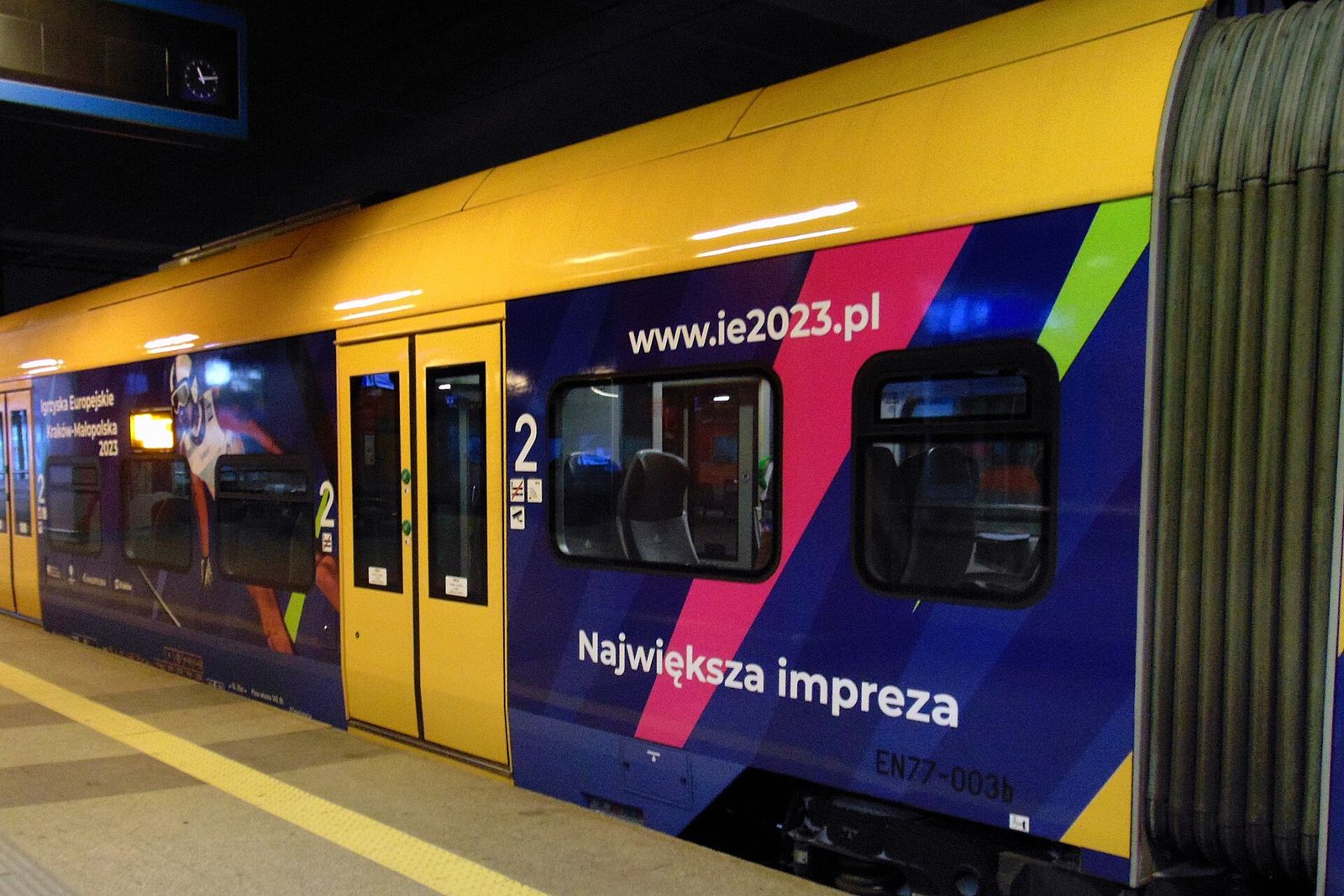
Trenitalia's Frecciarossa and Italo's high-speed services connect Milano Centrale to Firenze Santa Maria Novella in around ninety minutes, a journey that has quietly reshaped how people plan trips through northern and central Italy, since it makes a day trip between the two cities genuinely feasible rather than theoretical. Both stations are grand enough to be worth a look on their own, Santa Maria Novella in particular, an understated modernist building tucked directly behind the Gothic church it takes its name from.
Heading north instead of south from Milan, the route to Zurich via the Gotthard Base Tunnel is one of the more scenic rail journeys in Western Europe despite most of the tunnel itself being, obviously, underground; it is the approach through the Ticino valleys and the Alpine foothills on either side that makes the roughly three and a half hour trip worth choosing over a short flight. This is one of the clearer cases where rail beats flying door to door once you account for the fact that Milan's main airports sit well outside the city center while Milano Centrale does not, and Zurich's Hauptbahnhof sits directly under the old town rather than a train ride away from it.
The direct high-speed link between Paris and Barcelona Sants, run jointly by SNCF and Renfe, covers the distance in around six and a half hours, crossing the Pyrenees near Perpignan. Six and a half hours sounds long against a two-hour flight, but the comparison rarely holds up once you add the realistic airport-to-city time on both ends: getting to Charles de Gaulle or Orly, clearing security, waiting at the gate, landing at El Prat, and then getting into central Barcelona easily adds two to three hours on top of the flight itself. Door to door, the train's total time often ends up within an hour or two of flying, with none of the queuing and considerably more room to work, read or simply watch the landscape change from French vineyards to Catalan coastline.
This is the general rule worth carrying into any trip planning: below roughly four hours of scheduled rail time, the train usually wins on total door to door time and comfort; between four and seven hours it becomes a genuine toss-up depending on how central the airports are at each end; beyond seven or eight hours, flying typically pulls back ahead unless you specifically want the overnight option covered below. The reasoning behind that threshold is covered in more general terms in airport connections, which looks at the same door to door math from the flying side.
Austria's ÖBB Nightjet network has expanded steadily in recent years, and two routes worth knowing are Vienna to Zurich and Munich to Venice, both run overnight with a mix of seated carriages, couchettes (shared bunk compartments, usually four or six berths) and private sleeper compartments with two or three beds and sometimes an en-suite bathroom in the higher categories. A sleeper berth is not a hotel room, the ride has a gentle sway to it and stations along the way can produce the occasional jolt of coupling and shunting, but waking up as the train pulls into Venezia Santa Lucia, station platforms opening straight onto the Grand Canal, has a theatrical quality that no early morning flight into Marco Polo airport can match.
Booking a couchette is considerably cheaper than a private sleeper and perfectly workable for a single overnight hop, though light sleepers should bring earplugs and an eye mask regardless of category, since compartment doors and corridor lights operate on nobody's personal schedule. Night trains also solve a specific problem well: they convert what would otherwise be a full day of travel, or a rushed morning flight, into transport that happens while you are asleep, effectively giving you a free extra day at either end of the trip.
The Eurail and Interrail passes (the same product, sold to non-European and European residents respectively) offer a fixed number of travel days within a set period, usable across dozens of national and regional operators. They make the most sense for open-ended itineraries with several stops and a fair amount of spontaneity, since the pass itself does not lock you into specific trains, only specific days of use within a validity window. What they do not cover automatically is seat reservations, which many high-speed and international routes require regardless of whether you are traveling on a pass or a standard ticket; skipping the reservation fee is a common mistake that leaves travelers standing in a corridor between cities.
Point-to-point tickets, bought in advance for a specific train, are usually cheaper overall for a simple linear itinerary with two or three fixed stops, particularly on routes like Paris to Barcelona or Milan to Florence where advance fares can undercut a pass considerably if bought a few weeks out. The tradeoff is flexibility: an advance fare is typically tied to that exact train, with a change fee or no changes at all, while a fully flexible fare, bought closer to travel, costs more but lets you shift plans without penalty. This mirrors the airline fare bucket system described in how airline fares actually work more closely than most travelers expect, since European rail operators increasingly use the same kind of dynamic, demand-based pricing that airlines pioneered.
Central European stations tend to be large, multi-level and occasionally spread across more than one building, so a connection that looks generous on paper, twenty minutes between an arriving ICE and a departing Railjet at a station like Munich Hauptbahnhof, can feel tight in practice if the platforms sit at opposite ends of a long concourse. A rough working rule is to build in at least 30 to 45 minutes for a same-station connection at a major hub, and closer to an hour if it involves changing stations entirely, as can happen in cities like Rome or Naples where high-speed and regional services do not always share a terminus. Booking connecting tickets through a single reservation, rather than two separate ones, generally offers some protection if the first train runs late, since the operator has an interest in getting you onto a later connecting service, whereas two unrelated tickets leave you exposed exactly the way a self-connected flight itinerary does.
None of these corridors require much more planning than a domestic train ride once you know the pattern: check whether a seat reservation is mandatory, buy early if the itinerary is fixed, and treat any advertised journey time as a floor rather than a guarantee, since engineering works and seasonal timetable changes happen every year on even the busiest lines. What stays constant is the basic appeal, watching a landscape actually change instead of disappearing beneath cloud cover, arriving in the middle of a city instead of an hour outside it, and doing all of that while sitting somewhere you can actually stand up and walk around.
How To Get There
Fare buckets, booking windows and the small print that decides what you pay.
9 min read
How To Get There
Open-jaw tickets, sensible sequencing and how many cities is too many.
9 min read
How To Get There
Minimum connection times, terminal changes and the difference a single ticket makes.
7 min read