How To Get There
How To Plan A Multi-City International Trip
Open-jaw tickets, sensible sequencing and how many cities is too many.
By Thomas Bergeron · 9 April 2026 · 9 min read
How To Get There
Open-jaw tickets, sensible sequencing and how many cities is too many.
By Thomas Bergeron · 9 April 2026 · 9 min read
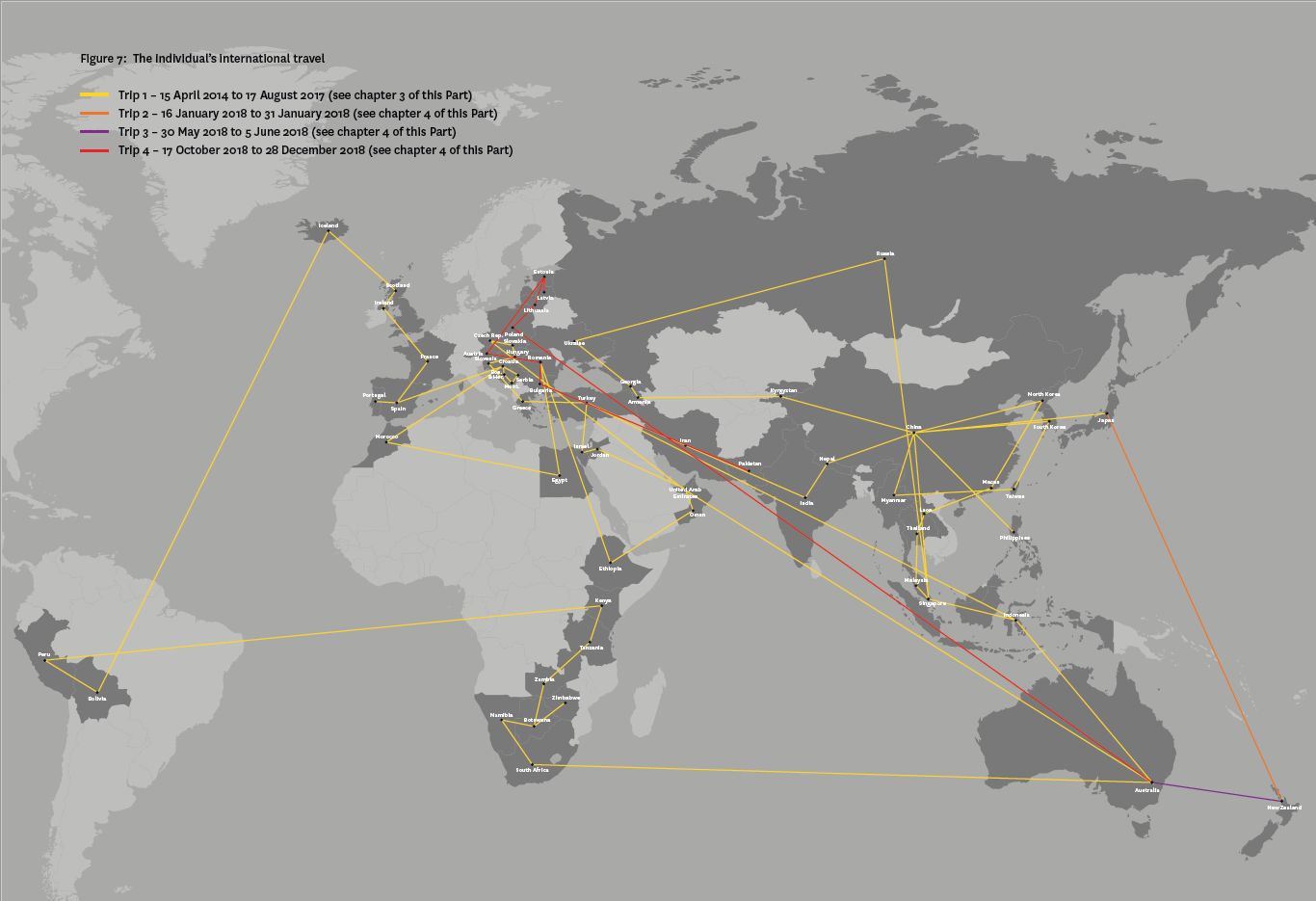
Most multi-city trips are not designed, they accumulate. Someone books a cheap flight into Lisbon, decides Madrid is too close to skip, adds a few days in Seville because a friend raved about it, and only then starts wondering how all of it connects. The result is often a route that backtracks across a country twice, a hotel booked for a night the traveler will actually spend on a train, or a tight connection stacked directly against a nonrefundable event ticket. None of this is inevitable. A multi-city trip behaves more like a small logistics project than a single booking, and treating it that way from the start saves money and stress later.
An open-jaw ticket is a single booking where you fly into one city and home from another, with the middle left for you to fill in by land, rail or a separate short flight. Fly into Lisbon, spend two weeks moving overland through Spain, and fly home from Madrid. Airlines price this as one fare, often barely more than a simple round trip, and because it is one ticket, a delay on the outbound leg does not touch the return. This is usually the cleanest way to structure a two-city trip and it is worth checking before assuming you need three separate one-way tickets.
A multi-city ticket, sometimes called a multi-stop fare, extends the same idea across more than two cities within a single itinerary, still issued by one airline or alliance. Some low-cost and long-haul carriers now offer these directly through their own booking tools, and airline alliances allow round-the-world style routings that touch several continents on one ticket. The appeal is real: one fare, one set of rules, and usually through-checked baggage. The catch is flexibility. Change one segment deep into a multi-city fare and the airline may reprice the entire ticket, not just the leg you touched, which can turn a small schedule adjustment into an expensive one.
Buying separate one-way tickets for each leg gives you the freedom to mix airlines, chase the cheapest fare on every segment, and swap out a city with no penalty to the rest of the trip. It is also how most budget travelers build a route through Southeast Asia or hop between European capitals on low-cost carriers. But each ticket is its own contract. If your inbound flight is delayed and you miss a self-booked onward flight, the second airline owes you nothing, because as far as it is concerned you simply did not show up. There is no rebooking, no hotel voucher, no obligation.
The practical fix is not to avoid separate tickets, since they are often genuinely cheaper and more flexible, but to build in a buffer wherever one ticket depends on another arriving on time. A same-day connection between two unrelated bookings, especially across an international border, is the single riskiest thing you can put in a multi-city itinerary. Give yourself a night in between if the flights are on separate tickets, or accept the small extra cost of booking connecting flights on the same reservation so the airline is responsible for getting you there. For more on how fare rules and ticket types affect this kind of risk, see how airline fares actually work.
Draw your route on an actual map before you book anything. It sounds obvious and almost nobody does it. A trip that reads fine as a list of cities, say Bangkok, Chiang Mai, Hanoi, Bangkok again for the flight home, often reveals an unnecessary loop once you see it geographically. Sequencing well usually means picking a rough direction, north to south or east to west, and resisting the urge to wedge in a city that sits off that line just because a flight there looked cheap in isolation. A detour that costs forty dollars on the fare comparison page can cost a full travel day once you account for airport transfers and the fact that you now need to fly back through where you already were.
Fly into Lisbon Humberto Delgado Airport, spend three or four days in the city and a day trip out to Sintra, then take a direct train or a short flight to Porto for two nights. From Porto, a bus or train back through central Portugal into Spain leads to Salamanca, then on to Madrid, where you fly home from Madrid Barajas. Nothing here doubles back on itself; the route moves in one direction, Lisbon to Porto to the Spanish interior to Madrid, and the open-jaw ticket means you never buy a flight you do not use.
Fly into Tokyo Narita or Haneda, spend the first stretch in the city with a day trip to Nikko or Kamakura, then take the Tokaido Shinkansen down to Kyoto, about two and a quarter hours by the fastest Nozomi service. From Kyoto, Osaka is a thirty-minute local train away and works well as the last stop before flying home out of Kansai International, which sits closer to Osaka than Tokyo does. This is a route where the rail line does the sequencing for you: the Shinkansen corridor runs in a fairly straight line, so as long as you move from Tokyo toward Kansai rather than zigzagging, you are not fighting the geography.
This one only works cleanly if you accept it is not a single overland loop but two shorter hops plus one longer international one. Fly into Bangkok Suvarnabhumi, spend several days in the city, then take a short domestic flight up to Chiang Mai for the temples and the surrounding hill country. From Chiang Mai, rather than flying back through Bangkok, look for a direct flight to Hanoi, which several regional carriers run, before flying home from Hanoi's Noi Bai. Because these are three different countries and likely three separate tickets, this is exactly the kind of itinerary where you want at least a few hours of padding around each connection, and ideally an overnight rather than a same-day change wherever the flight schedule makes that necessary.
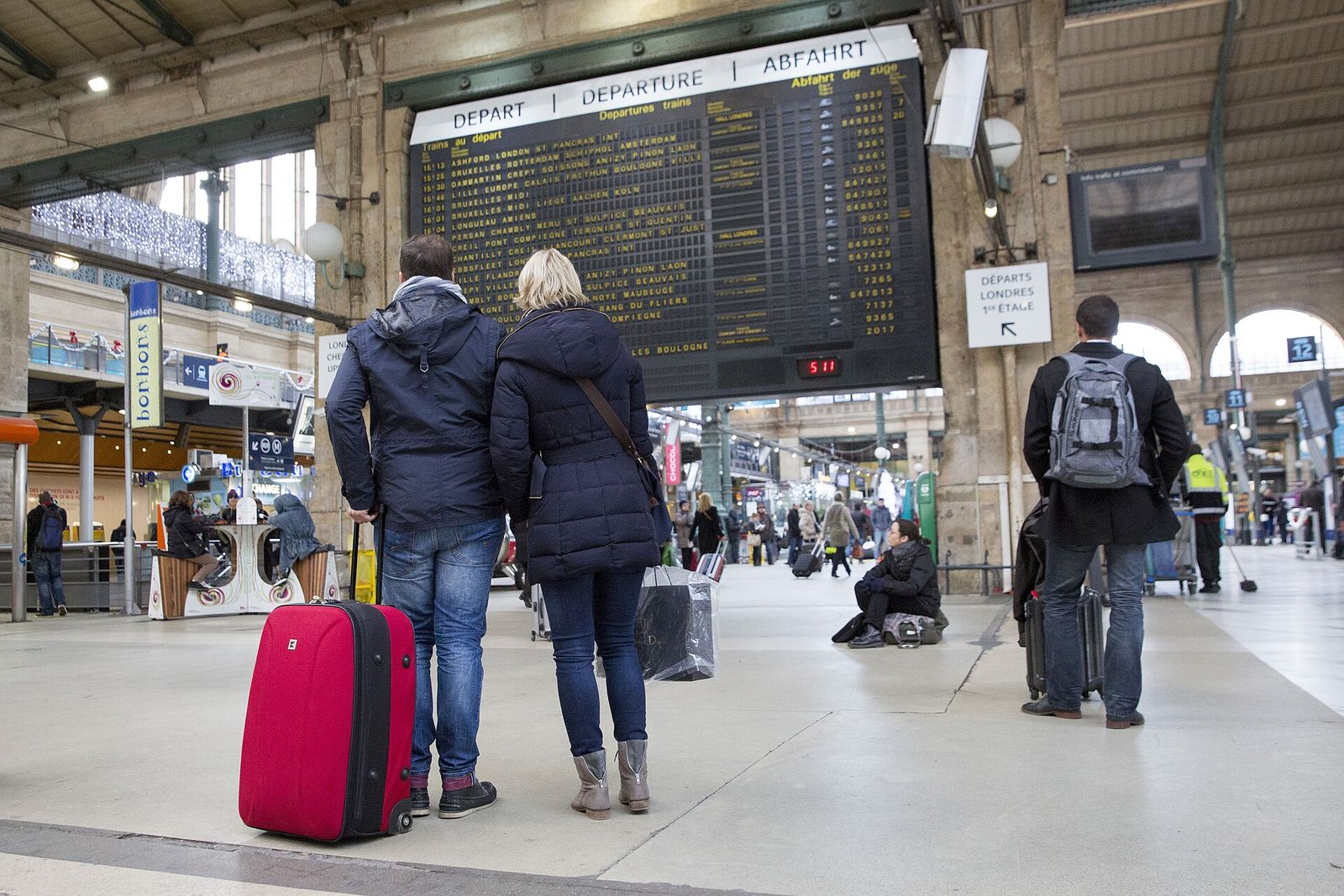
Between cities two or three hours apart by train, rail is usually faster door to door than flying once you count airport transfers, security and boarding buffers. It also removes an entire category of risk, since a delayed train rarely strands you the way a cancelled short-haul flight can. Europe's high-speed network, and Japan's Shinkansen network even more so, are built for exactly this kind of multi-city hopping, and buying rail tickets in advance for named, popular routes, Paris to Lyon, Madrid to Barcelona, Tokyo to Kyoto, is usually straightforward and often cheaper than booking on the day. For a broader look at how to use rail as connective tissue across a longer Europe trip, see train travel across Europe.
The one thing surface segments do not solve is luggage. Airlines through-check bags on a single ticket, but a train company has no such arrangement with an airline, so if your itinerary goes flight, then train, then flight again, you are physically handling your own bags at every switch. Pack accordingly. A single wheeled case and a daypack move through a train station with stairs and no lifts far more easily than two large suitcases.
When flights are on one ticket, airlines will normally through-check baggage to the final destination and rebook you automatically if a connection is missed because of their own delay. When they are on separate tickets, even with the same airline, that protection usually disappears, and you should plan to collect and recheck your bag at the connecting airport, which takes real time, especially if it also involves clearing immigration and customs first. This distinction matters more than almost anything else when you are deciding how tight to cut a connection, and it is covered in detail, scenario by scenario, in airport connections.
It is tempting, when building an itinerary on a spreadsheet, to schedule a flight for the morning and a museum for the afternoon of the same day. On paper it works. In practice, a flight that departs at ten means leaving the hotel by seven or earlier for an international departure, and a flight that lands at four in the afternoon rarely puts you anywhere useful before early evening once you have cleared immigration, found transport and checked into a new hotel. Budget the whole day for the move, especially for any international segment or one that crosses more than one time zone, and treat anything you manage to see on top of that as a bonus rather than the plan.
This is where itineraries most often overreach. A trip through six cities in twelve days sounds efficient until you realize four of those days are, in reality, travel days with nothing left over. It is usually better to cut one city from the list and give the remaining ones enough breathing room that a delayed train or a late checkout does not collapse the whole schedule. For more on avoiding an overstuffed schedule generally, how to plan a trip without overpacking the schedule covers the same instinct from a pacing angle rather than a routing one.
Book accommodation around your actual arrival and departure times, not the dates that look tidy on a calendar. A flight landing at eleven at night after a long-haul journey means you want a hotel with a simple, well-lit route from the airport and a front desk that expects late check-ins, not a guesthouse three flights up with no elevator and a host who goes to bed early. Equally, if you have an early flight out, booking a place a short taxi ride from the airport for the final night, even if it is slightly less central, often removes far more stress than it costs.
It also helps to build in one buffer night before anything that cannot move: a concert ticket, a timed museum entry booked months ahead, a wedding, an onward flight with a strict schedule. Put that buffer night in the city you are already in rather than assuming the connection will run exactly on time. If it does run on time, you get an unplanned extra evening somewhere you were enjoying anyway, which is a far better outcome than the alternative.

There is no fixed number, but a useful rule of thumb is to budget at least two full nights in any city you are including, three or more if it is meant to be a highlight rather than a waypoint, and to count every transfer day as consuming roughly half a day of sightseeing even when it does not officially block the whole thing. Under that arithmetic, a two-week trip comfortably supports three or four stops with real time in each, not six or seven with barely a night apiece. If a city is only getting one rushed evening, it is often worth asking honestly whether it belongs on the list at all, or whether it would be better saved for a future trip built around it specifically. Choosing where to actually stay within each stop is its own decision worth a bit of research; see how to choose the right neighborhood in a new city once your list of cities is settled.
None of this requires rigid planning down to the hour. It just requires deciding, before you start comparing individual flight prices, roughly where the trip goes and how it flows, then letting the ticketing choices follow the geography rather than the other way around.
How To Get There
Fare buckets, booking windows and the small print that decides what you pay.
9 min read
How To Get There
The continent's most useful rail corridors, and where a train genuinely beats a flight.
8 min read
How To Get There
Minimum connection times, terminal changes and the difference a single ticket makes.
7 min read