Travel Tips
How To Plan A Trip Without Overpacking The Schedule
One anchor per day, and why the gaps end up being the memorable part.
By Camille Rousseau · 19 February 2026 · 10 min read
Travel Tips
One anchor per day, and why the gaps end up being the memorable part.
By Camille Rousseau · 19 February 2026 · 10 min read
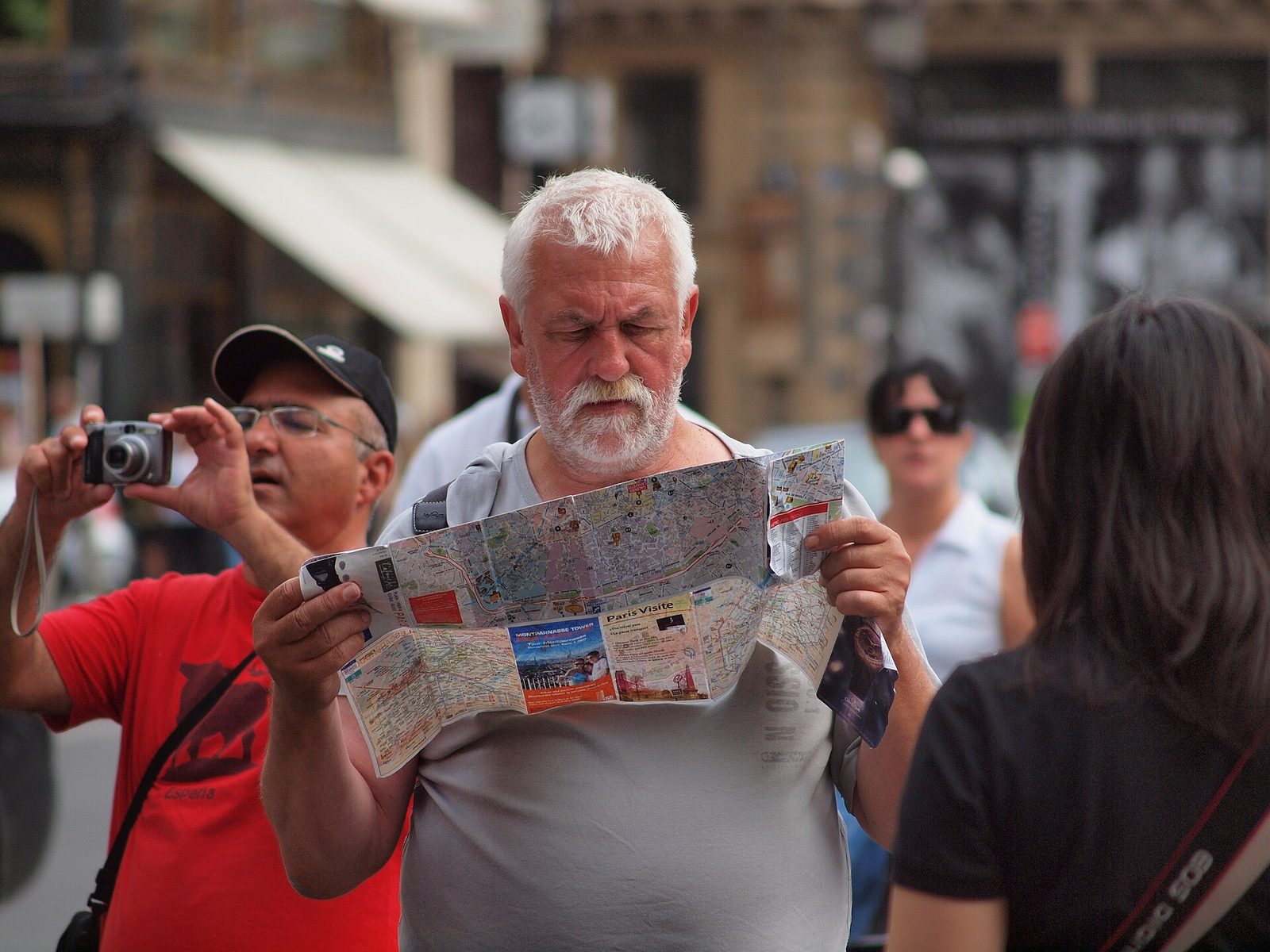
The itinerary looks fine on the screen. Louvre in the morning, Musee d'Orsay after lunch, a walk through the Marais at dusk, dinner near Saint-Paul. Nine hours, three highlights, done. Then the trip actually happens, and by 3pm you are standing in a ticket queue with sore feet, arguing with a travel partner about whether the second museum is even worth it anymore. This is the most common planning failure in independent travel, and it has nothing to do with picking the wrong places. It is a pacing problem, and it is fixable before you leave home.
A useful rule of thumb, tested across a lot of ordinary trips rather than ideal ones: one major anchor and one minor anchor per day, with everything else built around them as filler that can be dropped without regret. A major anchor is something that takes two to four hours once you include the queue, the audio guide, the gift shop detour and the inevitable moment someone needs a bathroom or a coffee. The Louvre is a major anchor. So is the Colosseum, so is a full loop of the Vatican Museums, so is a day at a theme park. A minor anchor is a neighborhood walk, a market, a single church or viewpoint, something you could compress to forty minutes or stretch to two hours depending on mood.
Two major anchors in one day is the single most repeated mistake in trip planning, and it is almost always a mistake of the printed schedule rather than the traveler. On paper, the Louvre and the Musee d'Orsay are a fifteen-minute walk apart, connected along the Seine, and both are open past 6pm on certain days. In practice, a proper visit to the Louvre easily eats three and a half hours once you have queued for security, found the wing you actually want, and lost forty minutes trying to locate an exit. By the time you reach the Musee d'Orsay you are tired, hungry, and visually saturated, and you end up doing a rushed lap of the Impressionist rooms that does neither museum justice. The fix is not to cut one of the museums. It is to put them on different days, each paired with a lighter neighborhood walk instead of another heavyweight collection.
Map applications tell you the transit time between two pins, and that number is honest but incomplete. It does not include walking to the platform, waiting for the train, transferring lines, or walking from the exit to the actual entrance of wherever you are going. In Tokyo, Shibuya to Asakusa looks like a thirty-minute journey on the Ginza Line map, and functionally it can be, but add the walk through Shibuya Station's underground maze, a possible transfer at a hub station during a busy hour, and the walk from Asakusa Station to Senso-ji, and you are closer to fifty minutes door to door. That is not a disaster, but if your schedule has it penciled in as thirty, you arrive frustrated and behind before the day has properly started.
The same arithmetic applies in New York, where the grid gives a false sense of compactness. Downtown Manhattan (the Financial District, Tribeca, the Lower East Side) and Uptown (the Upper East and West Sides, Harlem) are not a stroll apart. A subway ride between the two, with a transfer, can run thirty to forty-five minutes depending on the line and the hour, and a cab in traffic can be worse. Planning a day that bounces between the 9/11 Memorial downtown and the Metropolitan Museum uptown, with a stop at a Midtown store in between, is really a day about the subway, not about the city. It works better to cluster by borough and neighborhood and treat crosstown or uptown-downtown moves as their own event worth an hour, not a footnote.
Rest is not what happens when the plan runs out. It has to be scheduled the same way an anchor is, or it gets eaten first, usually by whichever activity ran long. A midafternoon gap of ninety minutes with no name on it, just marked as free, absorbs the shock when the morning museum ran forty minutes over or when everyone's feet need a sit-down before the evening. Travelers who schedule every waking hour tend to abandon the plan by day three, not because the plan was wrong but because it had no slack to absorb the ordinary friction of moving through an unfamiliar city.
This one gets ignored constantly. If your flight lands at 11am, that is not an 11am start to sightseeing. Immigration, baggage, transport into the city and hotel check-in (which may not be ready until 3pm) routinely consume three to five hours, sometimes more at busy hubs. Treat the arrival day as a half day at best: one gentle activity, a meal, an early night. The same logic applies in reverse on departure day, working backward from a flight time with enough buffer for airport connections and security. Planning a full day of sightseeing that ends with a mad dash to the airport is how relaxing trips end on a stressful note.
Eastbound and westbound jet lag are not the same experience, and treating them identically in a schedule is a mistake. Flying west, as from Europe to the US West Coast or from Japan to Hawaii, tends to be easier on the body because you are extending your day, and most people adjust within a day or two. Flying east, as from the US to Europe or from Europe to Japan, compresses your day and is harder to absorb; three to five days of genuine grogginess is common, with early waking and afternoon crashes. A trip that starts with an eastbound overnight flight should build in a soft first two days rather than front-loading the trip's biggest anchor on day one, when you are least equipped to enjoy it.
The instinct when planning is to list everything you want to see and then sort it by importance. A better method is to sort it by geography first, then importance within each cluster. In Paris, this means grouping the Marais, the Bastille area and Ile Saint-Louis into one walkable day, keeping the Louvre and the Tuileries as a separate day, and giving Montmartre its own half day rather than bolting it onto something else across town. In Lisbon, the geography argument is even stronger because the city's hills make casual wandering slower than it looks on a map; a day built around Alfama and the miradouros is a full day on foot, tram 28 included, and Belem, with the Jeronimos Monastery, the tower and the pasteis de nata shops, deserves its own separate half day rather than being squeezed in as an afternoon add-on, since the tram and bus ride out there alone eats thirty to forty minutes each way.
Rome produces its own version of the Louvre and Orsay mistake: the Vatican Museums in the morning, the Colosseum and Roman Forum in the afternoon. Both are extraordinary and both are exhausting, and the transfer between them, across the river and through central Rome traffic, is not trivial. Vatican visits routinely run three hours minimum with the Sistine Chapel queue included, and the Colosseum and Forum together deserve at least two and a half unhurried hours. Stacking them means rushing one, usually the second, at exactly the point in the day when you have the least patience left for a queue. Splitting them across two mornings, each followed by a lighter afternoon of neighborhood walking in Trastevere or Monti, produces a far better memory of both.
A day trip from Tokyo to Nikko or Hakone looks like an easy add to an itinerary because it is technically doable in a single day. It is also, functionally, a full day gone from Tokyo itself. Nikko is roughly two hours each way by train, Hakone similar depending on the route, and once you add local transport at the destination, a meal, and the fact that you will want to leave a buffer before the last convenient train back, you have spent eight to ten hours for perhaps four hours of actual time at the destination. That trade can be worth it, particularly for Hakone's onsen and views of Mt Fuji on a clear day, but it should be booked into the schedule as its own day, not squeezed between two other plans in central Tokyo.
Early starts matter for a related reason in Tokyo: the move of the old Tsukiji fish market's wholesale functions to Toyosu means the famous predawn tuna auction now happens at Toyosu, with limited public viewing that requires advance registration, while the outer market stalls remain at Tsukiji for food and browsing. Either way, both are at their best before 9am, and both fall apart as an afternoon plan; a day that puts Toyosu or Tsukiji after lunch is a day that has misunderstood what those places are for.
Outdoor-heavy days (a park, a coastal walk, an open-air ruin) should have an indoor backup a short distance away, not across town, so a sudden rain shower does not strand you. Conversely, anything with a timed-entry reservation, which now includes many major museums, the Eiffel Tower, and popular attractions across Japan for first time visitors style itineraries, should anchor the day rather than float in it, because you cannot simply push it back an hour if the morning runs long. Book the timed slots first, then build everything else around them, and check current booking windows and prices directly with the venue, since both change without much notice.
Here is a Paris itinerary that reads perfectly well as a list: 9am Louvre, 1pm lunch near the river, 2pm Musee d'Orsay, 4pm Notre-Dame area and Ile de la Cite, 6pm shopping on Rue de Rivoli, 8pm dinner in the Marais. Hour by hour, this is what actually happens. The Louvre opens at 9 but the queue, even with a pre-booked ticket, often has a wait; you are inside by 9:20 and, once you account for getting lost in the Denon wing, you do not leave until 12:45. Lunch runs to 1:45 because service in central Paris is not fast food. You arrive at the Musee d'Orsay at 2:15, already tired, and by 3:30 you are moving through the upper floors at a pace that does the paintings no favors. You leave around 4:15, later than planned, with Notre-Dame's area now compressed into thirty rushed minutes instead of a proper hour. Shopping gets cut entirely because everyone wants to sit down, and dinner in the Marais happens but at a restaurant chosen out of exhaustion rather than research.
The fixed version does not see fewer things. It sees the same list, spread so that each anchor gets the attention it deserves and the walking connects places that are actually near each other, rather than places that merely look near each other on a metro map. This is the core trick behind good pacing: the schedule should mirror how a city is actually laid out and how bodies actually get tired, not how a list of famous names looks when typed into a document.
The same principles scale up. Anyone working through how to plan a multi-city international trip runs into a version of this at the city-to-city level: too many stops, not enough transition time, arrival and departure days double-counted as full sightseeing days in two different cities at once. The fix is identical in spirit, just at a larger scale: fewer major stops, honest travel-time accounting between them, and buffer days where nothing specific is planned. If you are also working out how to build a realistic travel budget, note that overpacked schedules tend to cost more too, because rushed decisions lead to convenience purchases, taxis instead of trains, and skipped meals that get replaced by an expensive snack near whatever attraction you are late for.
None of this argues for a slow trip in the sense of doing less. It argues for a trip that is honest about what a day can hold, so that the things you did choose to see get seen properly, rather than glimpsed on the way to the next queue.
Travel Tips
A budget that survives contact with the trip: daily rates, fixed costs and a buffer.
8 min read

Travel Tips
Cancellations, missed connections and the order in which to make phone calls.
10 min read
Travel Tips
The avoidable errors that cost first-time travellers money, time and sleep.
7 min read