Where To Go
Japan For First-Time Visitors: A Practical Route From Tokyo To Kyoto
A first trip to Japan works best as a line, not a loop: Tokyo, one detour, then Kyoto.
By Elena Marchetti · 2 January 2026 · 8 min read
Where To Go
A first trip to Japan works best as a line, not a loop: Tokyo, one detour, then Kyoto.
By Elena Marchetti · 2 January 2026 · 8 min read
Most first trips to Japan collapse under the weight of their own itineraries. People try to fit Tokyo, Kyoto, Osaka, Nara, Hiroshima and two or three day trips into ten days, and end up spending as much time on trains and in stations as in the places they came to see. The country rewards a planning-led approach more than a place like, say, Italy does, because its transit system is precise enough that you can actually plan around it rather than leaving slack for delays. This piece works through the logistics first, then lays out a realistic route so the planning has somewhere to land.
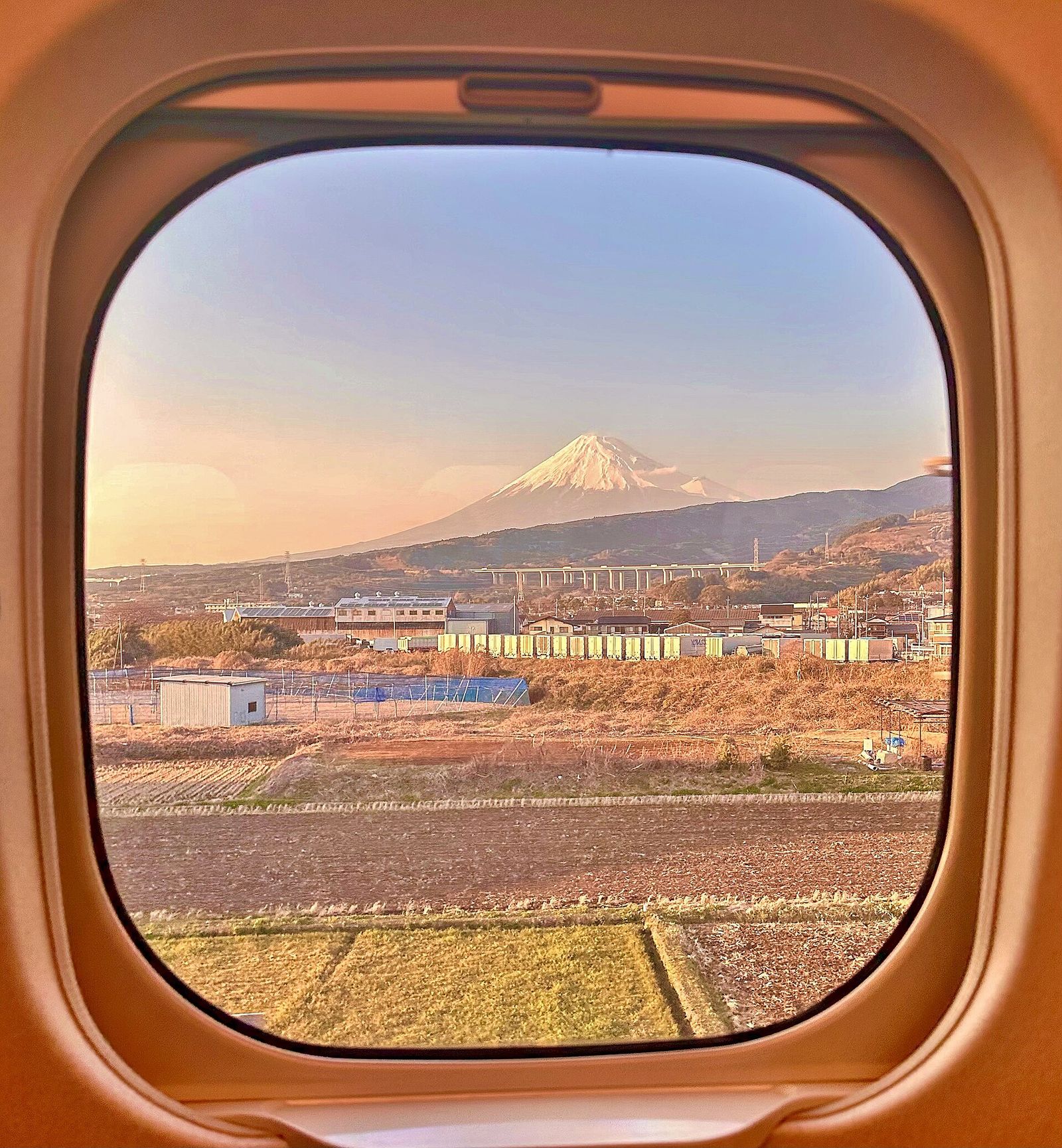
The Tokaido Shinkansen is the spine of a first-time Japan trip, running from Tokyo Station through Shinagawa, Yokohama, Nagoya, and Kyoto to Osaka's Shin-Osaka station. Trains leave every few minutes at peak times, journeys are fast (Tokyo to Kyoto in roughly two and a quarter hours on the fastest Nozomi services), and punctuality is close to absolute. This single line is why a Tokyo-to-Kyoto-with-Osaka-as-an-add-on structure works so well for a first visit: almost everything worth prioritizing sits within an hour or two of this corridor.
The Japan Rail Pass, once the automatic recommendation, is worth pricing out rather than assuming. It covers most JR trains including the Tokaido Shinkansen (excluding the fastest Nozomi and Mizuho services, where it only permits the slightly slower Hikari), and it makes sense if you're covering long distances multiple times, say Tokyo, Kyoto, Hiroshima and back. For a simpler Tokyo-Kyoto-Osaka loop without much backtracking, buying individual reserved tickets or a regional pass can come out cheaper. Either way, reserve Shinkansen seats a few days ahead in busy periods (cherry blossom season in late March and early April, and autumn foliage in November) since unreserved cars do fill.
Get an IC card on arrival, Suica or Pasmo in the Tokyo area, Icoca around Osaka and Kyoto, though all of them now work interchangeably across most of the country's trains, subways, buses and convenience stores. These are tap cards, loaded with credit and drawn down per ride, and they remove the single biggest daily friction of Japanese cities, which is that metro and JR lines are often run by different companies with separate ticket machines. Both cities also now support adding these cards directly to a phone wallet, which is worth doing before you land if your phone supports it.
The other logistic that trips up first-time visitors is luggage. Japanese trains, including the Shinkansen, have limited space for large suitcases, and dragging a big bag through a crowded Tokyo subway change is unpleasant for everyone involved. Takkyubin, the door-to-door luggage forwarding services run by companies like Yamato and Sagawa, are cheap, reliable and available from most hotel front desks and convenience stores: drop a bag off in Tokyo in the morning and it will typically arrive at your Kyoto hotel the next day. Plan for this rather than discovering it mid-trip, and keep only a day bag with you when you switch cities.
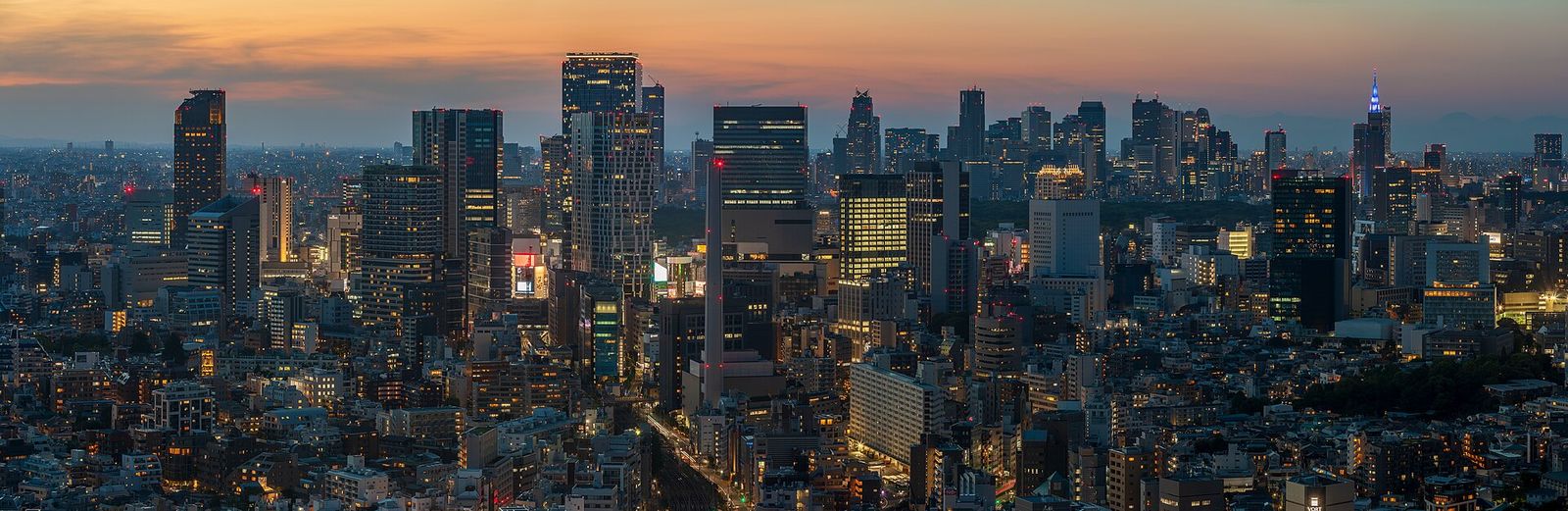
Tokyo does not have a single center in the way Paris or London does, it is a cluster of dense, quite different districts connected by rail, and the mistake most first-timers make is trying to see all of them on foot from one base. Shinjuku is useful as an introduction: the pedestrian crossing and neon of Kabukicho at night, the free observation deck at the Tokyo Metropolitan Government Building by day, and Shinjuku Station itself, one of the busiest in the world, worth experiencing once and then avoiding at rush hour after that.
Shibuya, one stop away on the Yamanote loop line, is the crossing everyone has seen in photos, best viewed from above at the Shibuya Sky observation deck or one of the surrounding cafes, then walked through at street level for the scale of it. Asakusa, in the older eastern part of the city, centers on Senso-ji temple and its approach street Nakamise-dori, and gives a useful contrast to Shinjuku's vertical modernity. Yanaka, a small district that survived the 1923 earthquake and wartime bombing largely intact, has a slower, older Tokyo feel, narrow lanes, a cemetery worth wandering, and cats everywhere; it pairs well with a morning walk after a busier Asakusa or Ueno visit. Marunouchi, around Tokyo Station, is worth a pass for the restored red brick station building and the Imperial Palace East Gardens nearby, especially if you're catching a Shinkansen from there anyway.
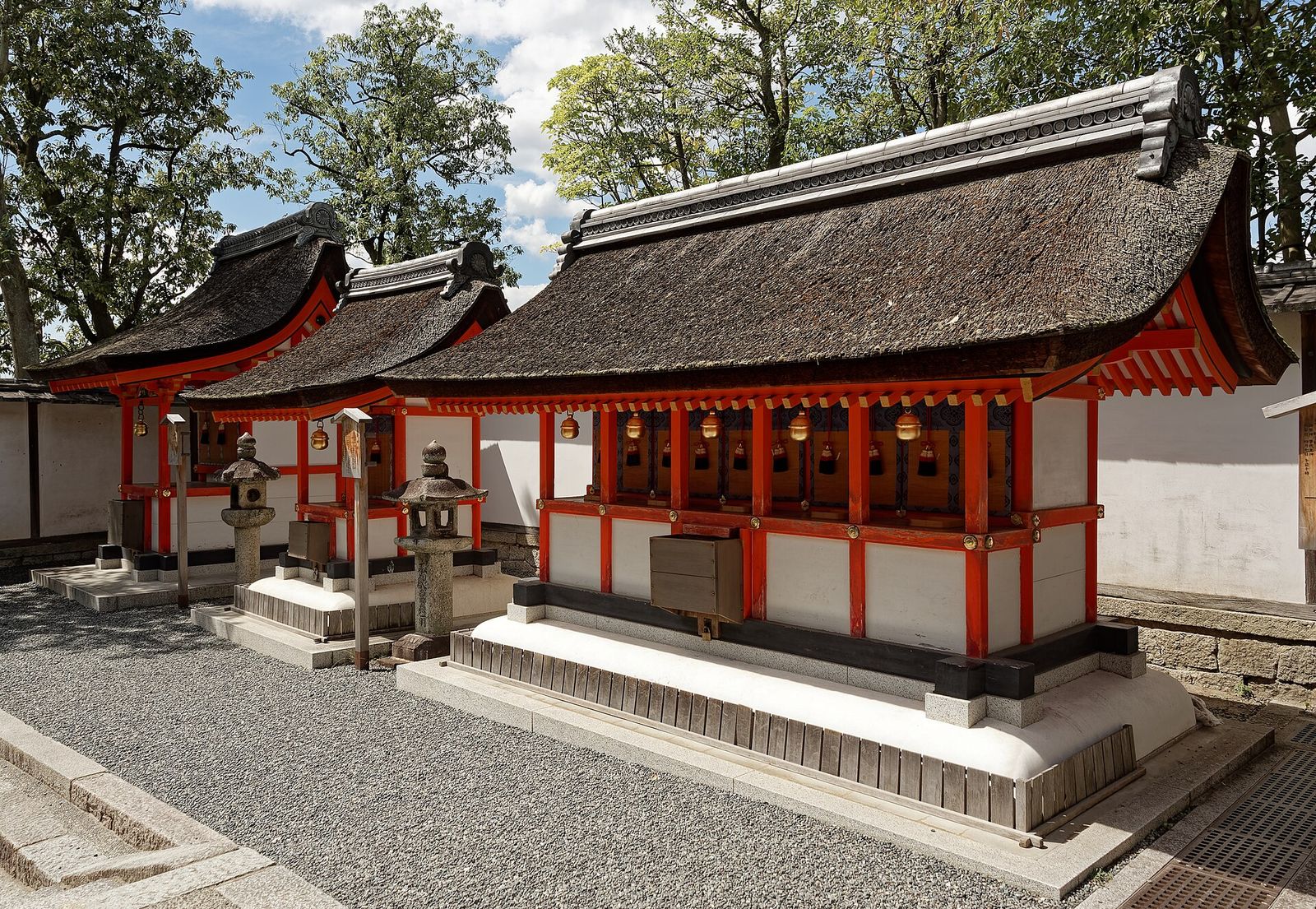
Three day trips get recommended constantly and it is worth being clear about what each one actually offers, since doing more than one on a first trip usually means shortchanging Tokyo itself. Nikko, about two hours north by train, has the elaborately carved Toshogu shrine complex set in cedar forest and suits travelers who want temple architecture without going as far as Kyoto yet. Hakone, roughly 90 minutes southwest, is built around hot springs, a scenic loop of trains, cable car and boat around Lake Ashi, and, on a clear day, views of Mount Fuji; it suits travelers who want scenery and a ryokan stay over strict sightseeing. Kamakura, under an hour south, has the Great Buddha and a string of quieter temples along wooded hills, and suits a shorter, half-day outing better than the other two.
If this is a first trip and time is tight, it is entirely reasonable to skip all three and spend the extra day inside Tokyo or in Kyoto instead. None of them are essential in the way the Tokyo-Kyoto axis is; they are additions for a second week or a slower pace. For general guidance on deciding what to cut from an ambitious itinerary, how to plan a trip without overpacking the schedule covers the underlying logic well.
Kyoto rewards the same district-based thinking as Tokyo, just at a slower, older register. Higashiyama, the preserved hillside district running from Kiyomizudera temple down through Ninenzaka and Sannenzaka's sloped lanes, is the most atmospheric daytime walk in the city, lined with wooden machiya buildings, tea houses and small craft shops. Kiyomizudera itself, with its wooden stage jutting out over the hillside on a lattice of pillars built without nails, is worth the crowds, and worth going early, ideally at or just after opening, to get any sense of quiet.
Gion, just north and west of Higashiyama, is Kyoto's famous geisha district, best visited in the early evening along Hanamikoji-dori, where you might glimpse a geiko or maiko moving between appointments; treat this as a chance sighting rather than a photo opportunity to chase, since the district has had real problems with tourist behavior toward performers and some streets are now off-limits to photography. Arashiyama, on the western edge of the city, holds the bamboo grove everyone has seen photographed, which is smaller and busier in person than it looks online, best visited at first light, along with the Tenryu-ji temple garden and a scenic riverside walk. Fushimi Inari, on the southeastern edge, is the shrine with the thousands of vermilion torii gates climbing the mountain behind it; the postcard section near the base gets crowded fast, but walking even 30 or 40 minutes up thins the crowd considerably and the gates continue most of the way to the summit.
Kyoto is compact enough to move between these districts by bus or a short taxi ride, though the bus network gets genuinely congested in peak season, so building in slack time between temple visits is worth it. For a broader sense of how cities like this reward slower movement rather than a checklist, ancient cities that still feel lived in is relevant background.
Nara, about 45 minutes from Kyoto by train, makes an easy half-day or full-day addition: Nara Park's free-roaming deer, the vast bronze Buddha inside Todai-ji temple, and the covered arcade approach are all walkable from the station area. Osaka, 15 minutes from Kyoto by Shinkansen, is a useful counterweight to Kyoto's formality, built around street food in Dotonbori, the castle grounds, and a livelier, less reserved local character; it also works as an exit point if your flight home departs from Kansai International Airport rather than Narita or Haneda.
For a first trip of ten to twelve days, a workable split is five nights in Tokyo with one day trip built in, four nights in Kyoto with a Nara day, and two nights in Osaka at the end before flying out of Kansai. Shorter trips should simply cut nights rather than cities; trying to see Tokyo, Kyoto and Osaka properly in under eight days usually means seeing all three badly.
The most common first-time mistakes are worth naming directly: booking accommodation without checking which train line it sits on, which turns every day into a longer commute than it should be; scheduling temple visits at midday in Kyoto, when both light and crowds are at their worst; underestimating how much walking is involved, since Japanese train stations themselves can require ten minutes of walking between platforms; and skipping convenience store food out of assumption, when Japan's convenience stores, particularly 7-Eleven, Lawson and FamilyMart, sell genuinely good, cheap meals that are worth building into a budget alongside restaurant dinners. On the budgeting side generally, how to build a realistic travel budget is a useful companion piece, and if this is one leg of a longer trip through the region, how to plan a multi city international trip covers the wider sequencing questions.
None of this requires rigid planning down to the hour. Japan's transit system is reliable enough that a loosely sequenced plan, built around neighborhoods rather than a scattered list of famous names, tends to work better than a tightly scripted one, since it leaves room to slow down in Yanaka or stay an extra hour at Fushimi Inari without derailing the rest of the day.
Where To Go
Two full days in Rio, arranged around the bay, the beaches and the hills, with realistic travel times between them.
8 min read
Where To Go
Europe's quieter cities reward the traveller who is willing to change trains once more.
10 min read
Where To Go
A short, honest itinerary for Iceland's south coast, including how far you can reasonably drive.
8 min read