Where To Go
A Weekend In Rio: Where To Go, What To See And How To Plan It
Two full days in Rio, arranged around the bay, the beaches and the hills, with realistic travel times between them.
By Camille Rousseau · 1 January 2026 · 8 min read
Where To Go
Two full days in Rio, arranged around the bay, the beaches and the hills, with realistic travel times between them.
By Camille Rousseau · 1 January 2026 · 8 min read

Two and a half days is not much time for a city built around mountains, beaches and a bay this large, but it is enough if you accept early mornings and skip the idea of doing everything. This route runs Friday afternoon through Sunday evening, moving from the South Zone beaches inward to the hills and the old center, then back out to the lakeside neighborhoods for a slower finish. It assumes you land at Galeao (GIG) or Santos Dumont (SDU), the smaller downtown airport used mostly for domestic shuttle flights from Sao Paulo.
If you land at Galeao, the ride into the South Zone takes 40 to 60 minutes depending on traffic on the Linha Vermelha, longer if you arrive during the evening rush toward Barra. Airport taxis are metered and fine, but most visitors now use Uber or 99 (the local ride app), which tends to be cheaper and lets you see the fare before committing. Santos Dumont, by contrast, sits close to Centro and a short cab ride from Flamengo or Botafogo.
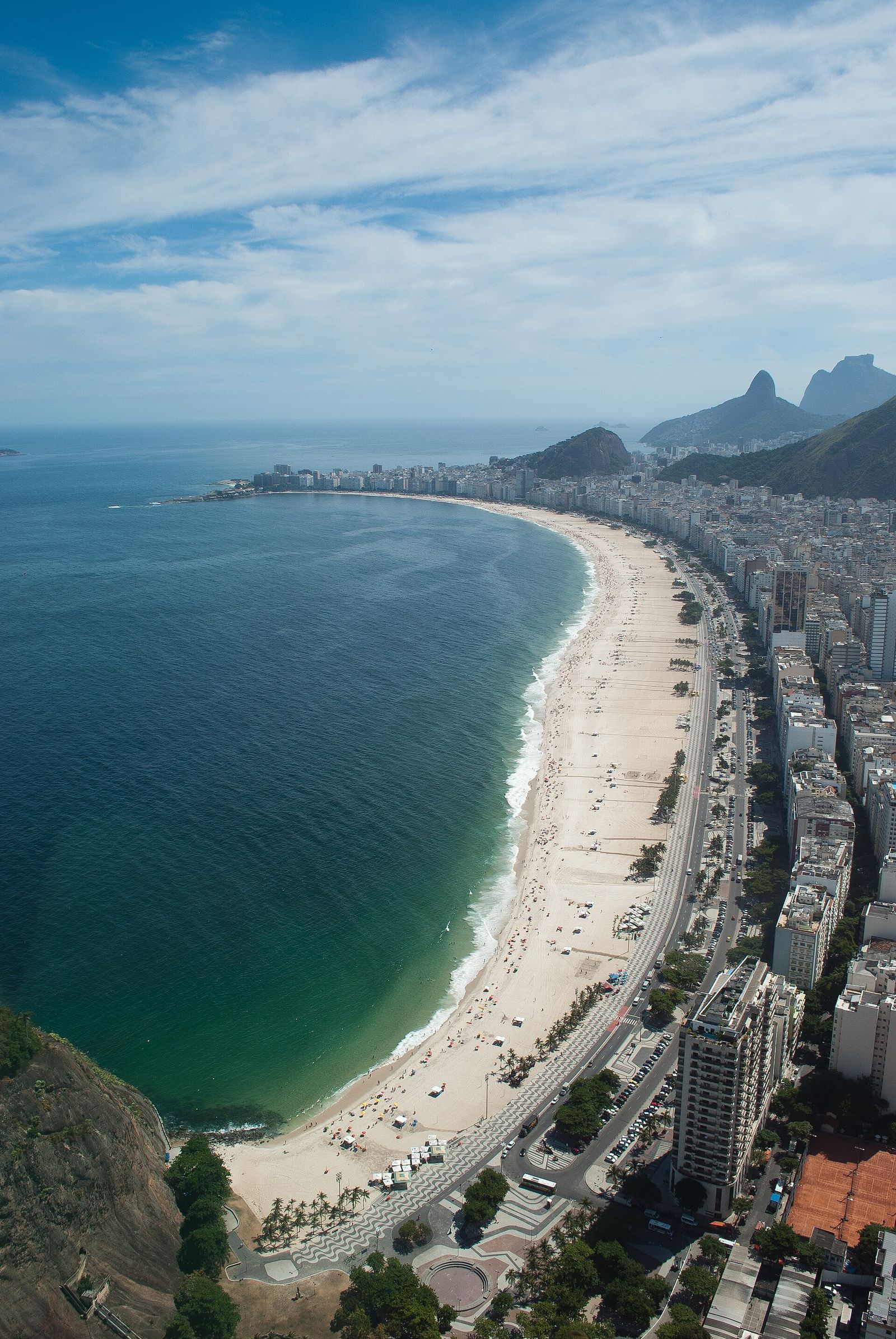
Copacabana is the obvious base for a first weekend, not because it is the most charming neighborhood in Rio but because it is central to almost everything on this itinerary and its metro station connects easily to the rest of the route. Drop your bags, then walk the beachfront promenade with its black and white wave-pattern mosaic, laid down in the 1970s and now one of the most photographed pavements in the world. Late afternoon light on Copacabana beach, with Sugarloaf visible to the north past the curve of the bay, is worth the jet lag.
Have dinner in Copacabana or walk 20 minutes south toward Arpoador, the rocky point that separates Copacabana from Ipanema. Arpoador draws a small crowd of locals and visitors every evening for sunset, clapping when the sun drops behind the hills of Dois Irmaos. It is a good low-key way to end a travel day and get oriented before the busier stretch ahead. For a broader sense of how to sequence a first stay in any unfamiliar city, the general approach in how to choose the right neighborhood in a new city applies well here too.
Sugarloaf (Pao de Acucar) is the one fixed point to build a Saturday around, and the reason to start early has nothing to do with crowds and everything to do with haze. Rio's humidity builds through the day, and the bay views from the upper cable car station are noticeably clearer before 9am. Take a taxi or app ride to the cable car station in Urca, a quiet, almost villagey neighborhood of low apartment blocks and a waterfront path that feels far removed from Copacabana's density.
The two-stage cable car goes first to Morro da Urca, a smaller hill with its own views and a cafe, then up to the 396 meter summit of Sugarloaf itself. From the top you get the full geography lesson: Guanabara Bay, the airport runways at Galeao, the bridge to Niteroi, Copacabana's curve, and Corcovado in the distance with its outstretched arms. Budget two to three hours round trip including queueing.
Walk around Urca afterward if you have the time and legs for it. The Circuito Urca path along the water, past the naval fortress and the little beach used mostly by local swimmers rather than tourists, is a pleasant, shaded contrast to the cable car crowds. Have lunch here or head back toward Botafogo, a business-and-residential district with a beach that is not for swimming (the bay water quality here is poor) but that gives one of the classic postcard views of Sugarloaf across the water.
Christ the Redeemer sits atop Corcovado inside Tijuca National Park, one of the largest urban forests in the world, and it deserves the second half of your Saturday. Access is controlled: you cannot simply drive up and park, you book a timed ticket for either the cog train (Trem do Corcovado) departing from Cosme Velho, or an official van/minibus from a designated pickup point. Buy this in advance, especially in high season (December through February) and around Brazilian holidays, since slots sell out.
The cog train is the more atmospheric option, climbing slowly through Atlantic Forest with glimpses of the city opening up between the trees. At the top, expect crowds and a short queue for the classic photo angle, then space out along the viewing platforms for the wider panorama. On a clear afternoon you can see Sugarloaf, the beaches, the lake, and the sprawl of the city into the hills beyond. On a cloudy day, and Rio does get cloudy days even in dry season, the statue's head disappears into mist, so check a weather forecast the morning of and be ready to swap this with Saturday's second half if needed.
If forest rather than statue is the draw, Tijuca National Park has other corners worth a slower visit on a return trip: the Cascatinha waterfall, the Mirante Dona Marta viewpoint (arguably a better, less crowded panorama than Corcovado itself, and free), and hiking trails up Pedra da Gavea for those with a full day and decent fitness. None of that fits comfortably into a first weekend, but it is worth knowing the park is much bigger than the one statue that represents it.
Come down from Corcovado toward Santa Teresa, the hillside neighborhood of cobbled lanes, colonial-era houses and artist studios that escaped much of Rio's high-rise development. The old yellow tram, the Bonde de Santa Teresa, still runs a short loop through the neighborhood and over the Arcos da Lapa aqueduct, and riding it even for a few stops gives a good feel for the area's slower pace.
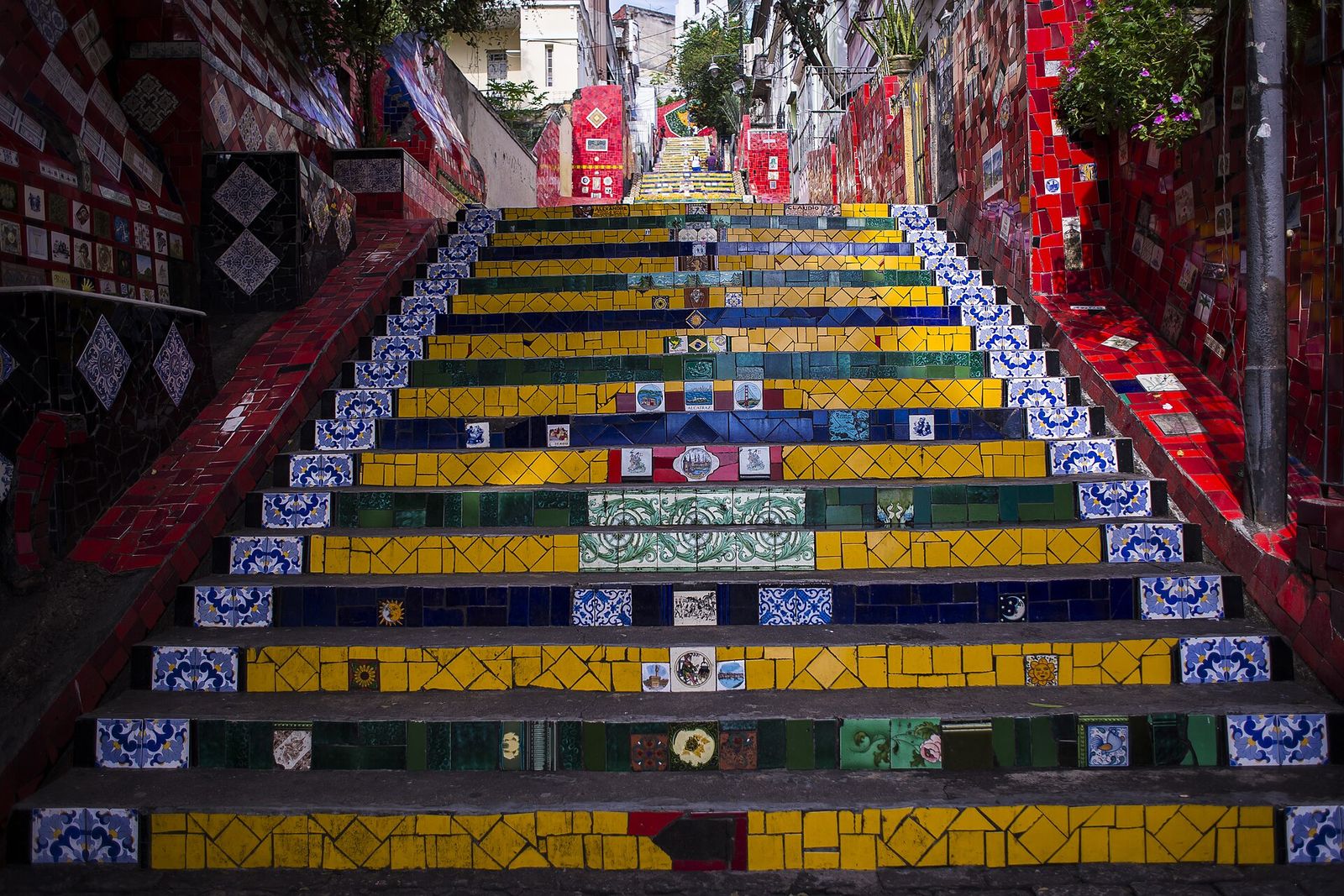
Walk or taxi down into Lapa as the evening builds. The Selaron Steps, the mosaic staircase covered in tiles from more than 60 countries that the Chilean-born artist Jorge Selaron built and rebuilt over two decades until his death in 2013, connect Santa Teresa to Lapa and are worth seeing in daylight for the detail and again at night for the atmosphere. Lapa itself is Rio's traditional samba and nightlife district, loudest under the aqueduct arches on Friday and Saturday nights, with live music spilling out of small bars along Rua do Lavradio and Avenida Mem de Sa.
This is also the point in the weekend where a sober word on safety is worth including rather than skipping. Santa Teresa and Lapa are well visited and generally fine in the early evening and while out with a group, but both areas, like most nightlife districts in a large Brazilian city, warrant normal urban caution after dark: keep phones and bags secure, stick to streets with other pedestrians, and take a taxi or app ride rather than walking back to Copacabana late at night. None of this should stop you from going, it is simply the same practical awareness locals themselves apply.
Sunday is quieter in Centro, Rio's downtown, since the office crowds that fill it on weekdays are gone, though that also means some cafes and shops are shut. What remains open and worth the walk: the Metropolitan Cathedral, a striking cone-shaped concrete building unlike anything else in the city; the ornate Theatro Municipal facing Cinelandia square; and the Escadaria and surrounding streets of the old commercial core near Praca XV, where the ferry to Niteroi departs across the bay.
The Museu do Amanha, the angular museum of tomorrow designed by Santiago Calatrava, sits out on the revitalized Praca Maua waterfront and is a reasonable stop if museums are your thing, though it competes for time you may prefer to spend outdoors. Centro connects to Copacabana via metro Linha 1, and this is the one stretch of the weekend where the subway genuinely beats a car: fast, air conditioned, and free of the traffic that clogs the tunnels connecting the zones.
Head back toward the South Zone and spend the early afternoon at the Jardim Botanico, Rio's botanical garden, planted originally in 1808 under Portuguese royal orders and now home to avenues of towering imperial palms, water lily ponds, and a resident population of marmosets and toucans that are easy to spot if you walk slowly. It is one of the few genuinely calm outdoor spaces in the city and a good counterweight to two days of viewpoints and crowds.
From there it is a short ride to Lagoa Rodrigo de Freitas, the lake ringed by a popular running and cycling path with Corcovado visible across the water. Renting a bike for an hour, or simply sitting at one of the kiosks along the shore, is a good low-effort way to close out the trip. Late Sunday afternoon, walk or taxi over to Ipanema for the classic Posto 9 sunset scene, then continue along the beachfront into Leblon, the quieter, more residential neighbor to Ipanema, for dinner.
Ipanema and Leblon are also where the shopping and dining sit a notch above Copacabana's more tourist-driven strip, so if your flight is late Sunday or Monday morning, this is a comfortable place to end the weekend rather than rush back. For anyone extending the trip by a day or two, the world's great city landmarks beyond the obvious viewpoint is useful background on choosing a second, less obvious lookout over Guanabara Bay.
Rio's dry season, roughly May through September, brings cooler, more reliable weather and clearer viewpoint days, though it is also winter by local standards, with mornings in the high teens Celsius. December through March is hot, humid and busier, especially around New Year's Eve on Copacabana beach and Carnival, which moves with the lunar calendar but usually falls in February or early March. Neither season is wrong for a weekend trip, but book Corcovado tickets and any Carnival-adjacent accommodation well ahead if your dates overlap.
A weekend like this leaves out plenty, Niteroi's contemporary art museum across the bay, the northern beaches of Barra da Tijuca, a proper hike up Pedra da Gavea, but it covers the sights that make Rio's geography legible: the bay from Sugarloaf, the forest and the statue from Corcovado, the old city on foot, and the beaches at the pace they're meant to be seen. If you're weighing Rio against other stops on a longer South American or transatlantic route, the planning framework in how to plan a multi city international trip is a reasonable place to start, and general seasonal and document questions are covered in before you go.

Where To Go
A first trip to Japan works best as a line, not a loop: Tokyo, one detour, then Kyoto.
8 min read
Where To Go
Europe's quieter cities reward the traveller who is willing to change trains once more.
10 min read
Where To Go
A short, honest itinerary for Iceland's south coast, including how far you can reasonably drive.
8 min read