What To See
The World's Great City Landmarks Beyond The Obvious Viewpoint
Where to stand so that a famous landmark still surprises you.
By Daniel Okonjo · 11 May 2026 · 8 min read
What To See
Where to stand so that a famous landmark still surprises you.
By Daniel Okonjo · 11 May 2026 · 8 min read
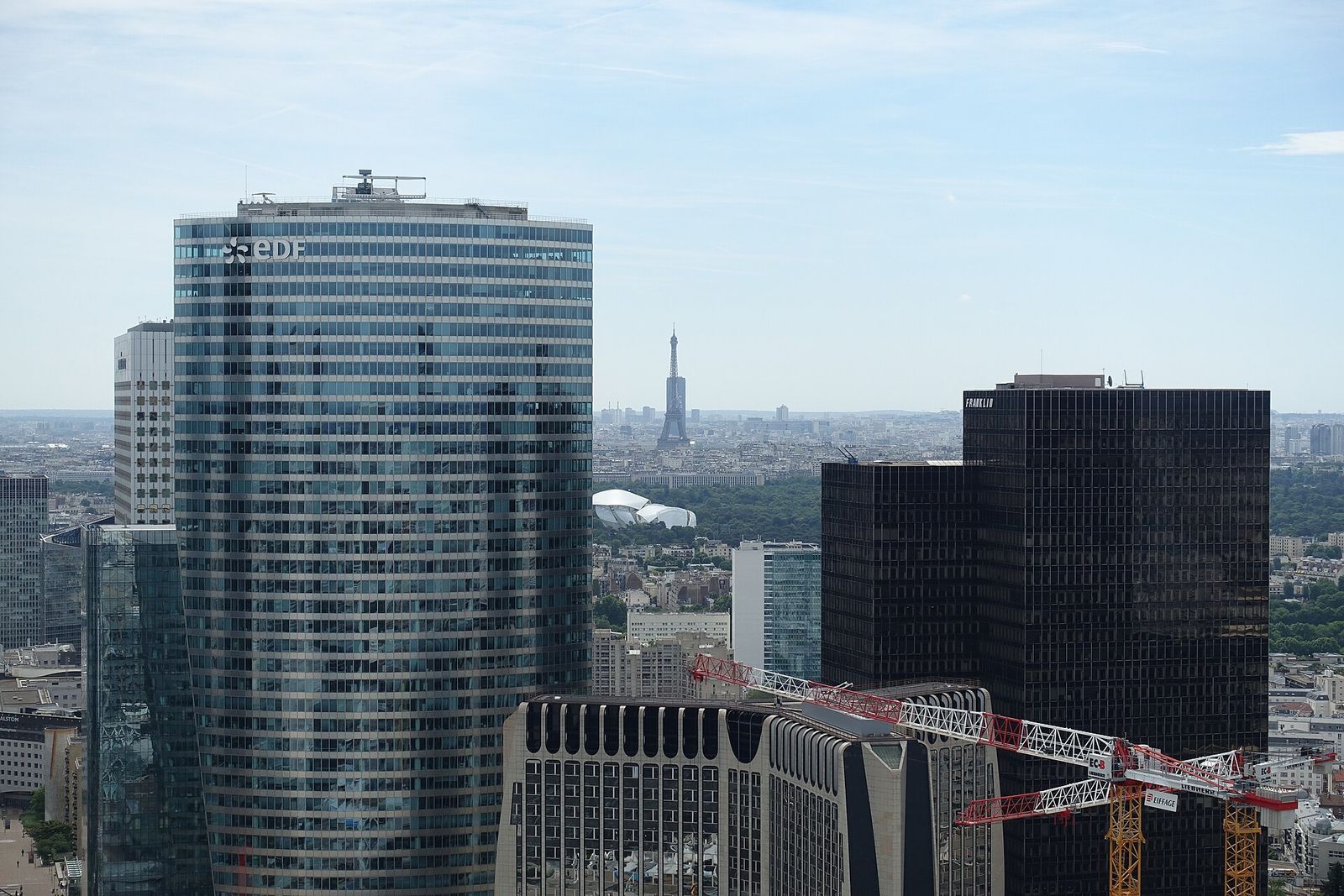
There is a particular kind of disappointment that sets in at Trocadero around ten in the morning, when the crowd is eight rows deep and everyone is holding a phone at the same angle, aiming at the same tower, trying to get the same photograph that a million other people already have. The Eiffel Tower is still magnificent from there. But standing shoulder to shoulder with tour groups, straining to see past selfie sticks, you start to wonder if you are actually looking at the tower or just looking at the back of someone's phone case.
This is the quiet argument behind almost every great landmark: the single most famous viewpoint is famous because it is easy, not because it is best. Easy to find, easy to reach by metro, easy to describe to a taxi driver. The better view is usually a short walk or a different neighborhood away, and it tends to reward you with something the postcard spot cannot, which is a sense of the city actually living around the monument rather than performing for it.
Rue de l'Universite, on the Left Bank near the Assemblee Nationale, gives you the tower rising at the end of a residential street lined with cream-colored Haussmann buildings and wrought-iron balconies. It is a completely ordinary Parisian street until suddenly it is not, and that contrast, mundane apartment blocks with the tower punctuating the sky at the far end, tells you more about how Parisians actually experience the Eiffel Tower than any wide-open plaza does. It is a landmark they walk past on the way to buy bread.
Pont de Bir-Hakeim is the other classic alternative, a two-level bridge that carries both the metro line 6 and pedestrian traffic across the Seine, made recognizable to anyone who has seen Inception. Cross it in the late afternoon and you get the tower framed by the bridge's iron arches, with the elevated metro rattling past every few minutes, which somehow adds rather than detracts. For something entirely different, climb up to Parc de Belleville in the 20th arrondissement, a neighborhood of steep streets, Chinese groceries, and one of the best skyline views in the city, where the Eiffel Tower becomes a small silver needle on the horizon rather than the whole point of the photograph. Timing matters everywhere here: the tower's hourly light show after dark is worth catching from any of these spots, but the flat golden light in the hour before sunset is what actually makes the stone and ironwork glow.
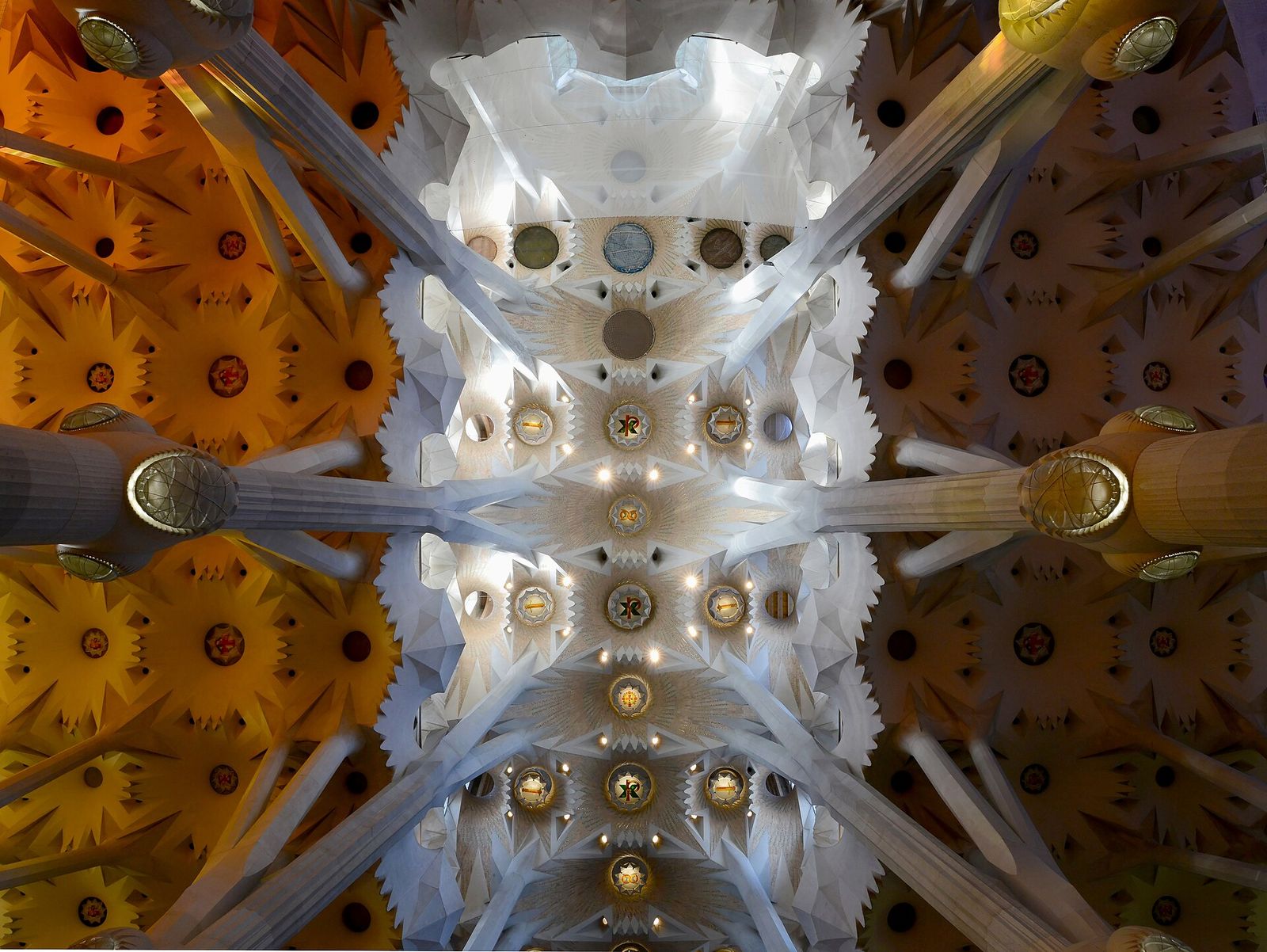
The Sagrada Familia rewards a split strategy more than almost any other landmark on this list, because its exterior and interior are essentially two different buildings with two different ideal viewing conditions. From Placa de Gaudi, the small park directly across Carrer de Mallorca from the Nativity facade, you get the full vertical sweep of the towers reflected in the park's pond, and this is where most people take their first photograph. Go at dusk instead of midday. The stone facade, carved with tangled vines and figures, catches warm light that midday sun flattens out, and the crowds thin as tour buses head back to their hotels for dinner.
Inside is the opposite problem and the opposite solution. Gaudi designed the nave's stained glass to respond to the direction of the sun, blue and green glass on the east side catching morning light, warm reds and oranges on the west catching afternoon light. Book the earliest available entry slot, ideally close to opening, and you will see the eastern glass throwing pools of cool color across the stone columns with almost nobody standing in your frame. Sagrada Familia tickets are timed and often sell out days ahead in high season, so this is one case where planning the specific hour is not just about atmosphere, it is the only way in.
Everyone photographs the Manhattan skyline from Manhattan, which is a bit like photographing a mountain range from inside one of the peaks. The better views put water between you and the buildings. The Staten Island Ferry, free and running around the clock, cuts across Upper New York Bay past the Statue of Liberty with the entire downtown skyline stacking up behind it, and because it is a working commuter ferry rather than a tour boat, you can ride it back and forth as many times as you like without paying for the privilege twice.
Roosevelt Island, reached by a cable car strung across the East River from 59th Street, gives a completely different angle on Midtown, closer and more architectural, with the United Nations building and the row of glassy towers along the river visible from the island's quiet promenade. Governors Island, open seasonally and reached by a short ferry from the Battery, adds a foreground of lawns, old fort walls, and hammocks to a skyline shot that most visitors only ever see from a rooftop bar. Our guide to New York beyond Manhattan goes deeper into these outer-borough and island approaches if a slower version of the city appeals to you.
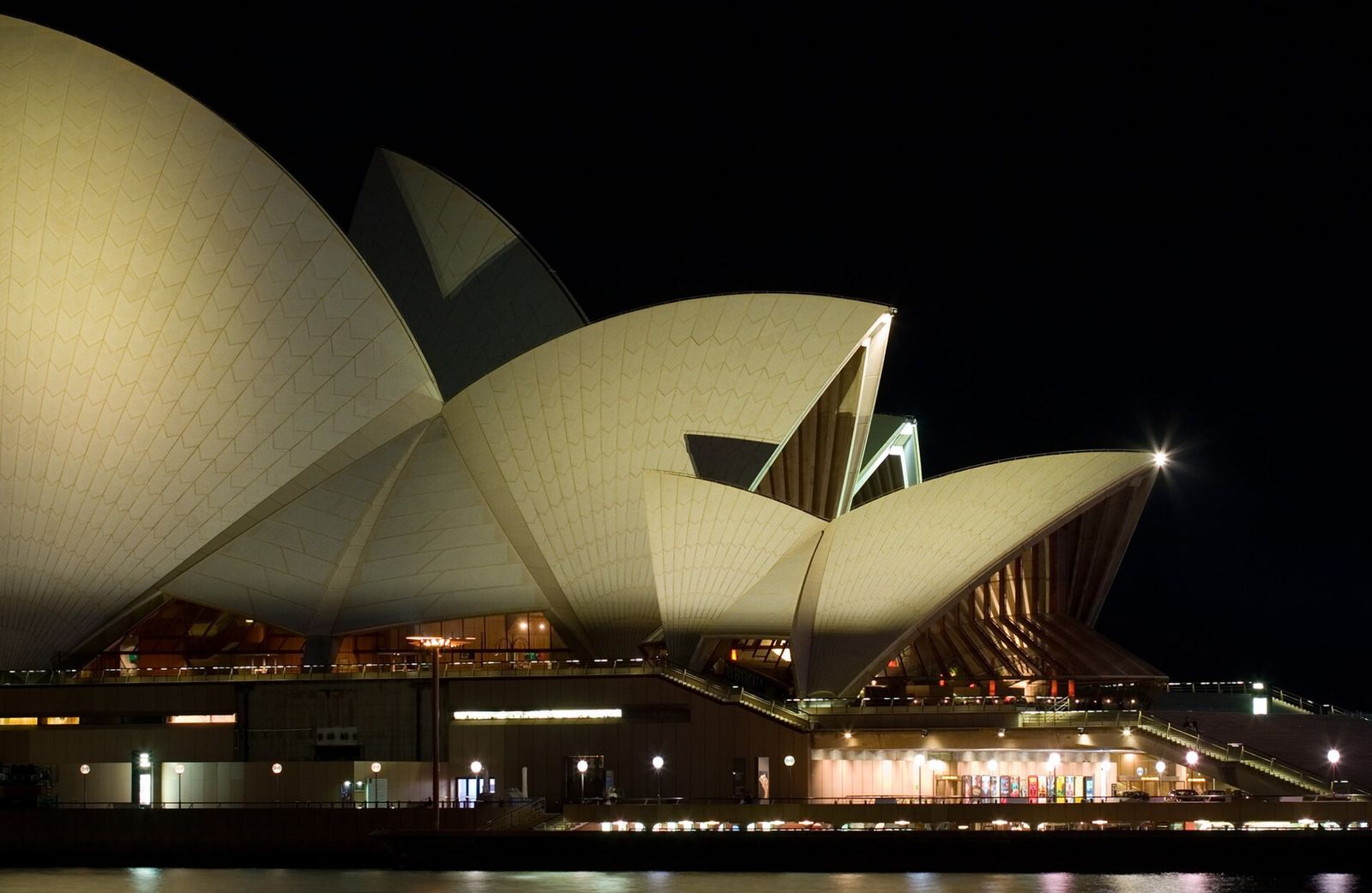
The Sydney Opera House is designed to be seen in the round, and the standard tourist approach, walking up to it from Circular Quay, only shows you one side of the shells. Kirribilli, on the North Shore, sits almost directly across the harbor and gives the classic long view with the Opera House and the Harbour Bridge in the same frame, best around sunset when the sails catch the last light and the city towers behind them go gold.
But the view that actually changes your understanding of the building is from the Manly ferry, which departs regularly from Circular Quay and takes about thirty minutes each way across the harbor. As the ferry pulls out, the Opera House rotates in front of you, and you can watch the shells shift from a flat white wedge into a fully three-dimensional stack of curved forms, backed by the Harbour Bridge and the office towers of the CBD. It is one of the few landmark views in the world you get simply by using public transport for its intended purpose.
Tower Bridge looks fine from the north bank near the Tower of London, where most people stand, but it looks better from Bermondsey on the south side, where a scattering of riverside pubs and warehouse conversions let you see the bridge's twin towers with the shifting industrial-to-glass skyline of the City behind it, largely without a crowd. Milan's Duomo works on the opposite principle: the ground-level view of the facade from Piazza del Duomo is essential, but the rooftop terraces, reached by stairs or a lift, put you eye to eye with the forest of spires and marble statues that most visitors never look at closely, with the Alps sometimes visible on a clear winter day.
In Istanbul, Hagia Sophia is usually photographed from the square between it and the Blue Mosque, which is accurate but flat. Walk a few minutes north into Gulhane Park, the former outer garden of Topkapi Palace, and the building appears above the trees with none of the crowd noise, its dome and minarets rising from greenery rather than paving stones. It is a small shift in position that turns a monument into something closer to a landscape.
San Francisco's fog makes the standard viewpoints unreliable in a way that is worth planning around rather than fighting. Battery Spencer, a short drive up into the Marin Headlands, sits above the bridge's north tower and gives the classic elevated shot, span and towers and the city skyline beyond, but only when the fog has not rolled in, which in summer months can mean afternoons are hopeless and mornings are gold. Marshall Beach, reached by a short trail below Battery Spencer, puts you at water level almost underneath the bridge, close enough to feel its scale rather than just admire its shape, and it works even when the upper viewpoints are socked in, because the fog often sits higher than the beach.
None of this is really about photography, even though photographs are usually the excuse. It is about the difference between confirming that a landmark exists and actually understanding it: its scale, its material, the way light moves across it through a day, the way a city has built its ordinary life in the monument's shadow. A tower seen from a bakery street, a cathedral lit by its own designed light, a harbor building rotating slowly as a ferry carries you past it, these are the versions of famous places that stay with you longer than the view everyone else already has in their camera roll. For more on structuring a visit around timing and light rather than checklists, see our thoughts on how to plan a trip without overpacking the schedule, and if you are stitching several of these cities into one journey, how to plan a multi-city international trip covers the logistics.
Consider building in slack for at least one of these detours on your next city trip, rather than treating the famous viewpoint as the whole assignment. A bridge crossing, a ferry ride, a fifteen-minute walk into a residential street, these cost you almost nothing in a schedule and tend to be the part of the trip you actually remember. For broader thinking on how neighborhoods shape the way a destination feels, our piece on how to choose the right neighborhood in a new city is a useful companion to this one, since the logic, moving slightly off the obvious center, applies as much to where you sleep as to where you point a camera.
What To See
Old cities that remain working cities, and how to visit them respectfully.
8 min read
What To See
Parks that deserve more than a day trip, with notes on seasons and permits.
10 min read
What To See
Coastal routes best measured in ferry timetables rather than kilometres.
9 min read