What To See
National Parks Worth Building A Trip Around
Parks that deserve more than a day trip, with notes on seasons and permits.
By Camille Rousseau · 13 June 2026 · 10 min read
What To See
Parks that deserve more than a day trip, with notes on seasons and permits.
By Camille Rousseau · 13 June 2026 · 10 min read
A national park deserves more than a signature at the entrance gate and a photo at the first pullout. The parks below reward a real commitment of days, not hours, and each one has its own logistics that can make or break the trip if you do not plan around them: entry permits that sell out months ahead, roads that close for half the year, or a shuttle system that quietly replaces your rental car once you arrive. This is a park-by-park dossier, built for people who are already choosing a destination and need to know what a realistic itinerary actually looks like.
Yellowstone spreads mostly across Wyoming but pokes into Montana and Idaho too, and which side you fly into changes the trip. Bozeman, Montana, sits about 90 minutes from the park's West Entrance and works well if you want a small city with an airport served by direct flights from several US hubs. Jackson, Wyoming, sits south of the park via Grand Teton National Park, and suits travellers pairing Yellowstone with the Tetons, at a pricier, more resort-like pace.
The park itself is built around a rough figure-eight of road connecting its major basins. Old Faithful and the Upper Geyser Basin get the crowds, deservedly, since nowhere else on earth has this concentration of active geysers, but the Midway Geyser Basin, with the Grand Prismatic Spring, and the quieter Norris Geyser Basin are just as worth the walk. Lamar Valley, in the park's northeast corner, is the place to slow the car down at dawn or dusk and watch for wolves, bison and grizzlies working the sagebrush flats; it has been called the Serengeti of North America by more than one park ranger, and the comparison is not entirely a stretch once you have seen a wolf pack cross the road there.
Five full days is a reasonable minimum for the major basins plus Lamar Valley and Yellowstone Lake without rushing. Interior roads typically close from early November to late April or May depending on snowfall, and the Beartooth Highway approach from the northeast, one of the country's most dramatic drives, usually opens only a few summer months. Timed-entry systems have appeared and disappeared at various US parks recently, so check the National Park Service site close to your travel dates rather than assuming last year's rules still apply.
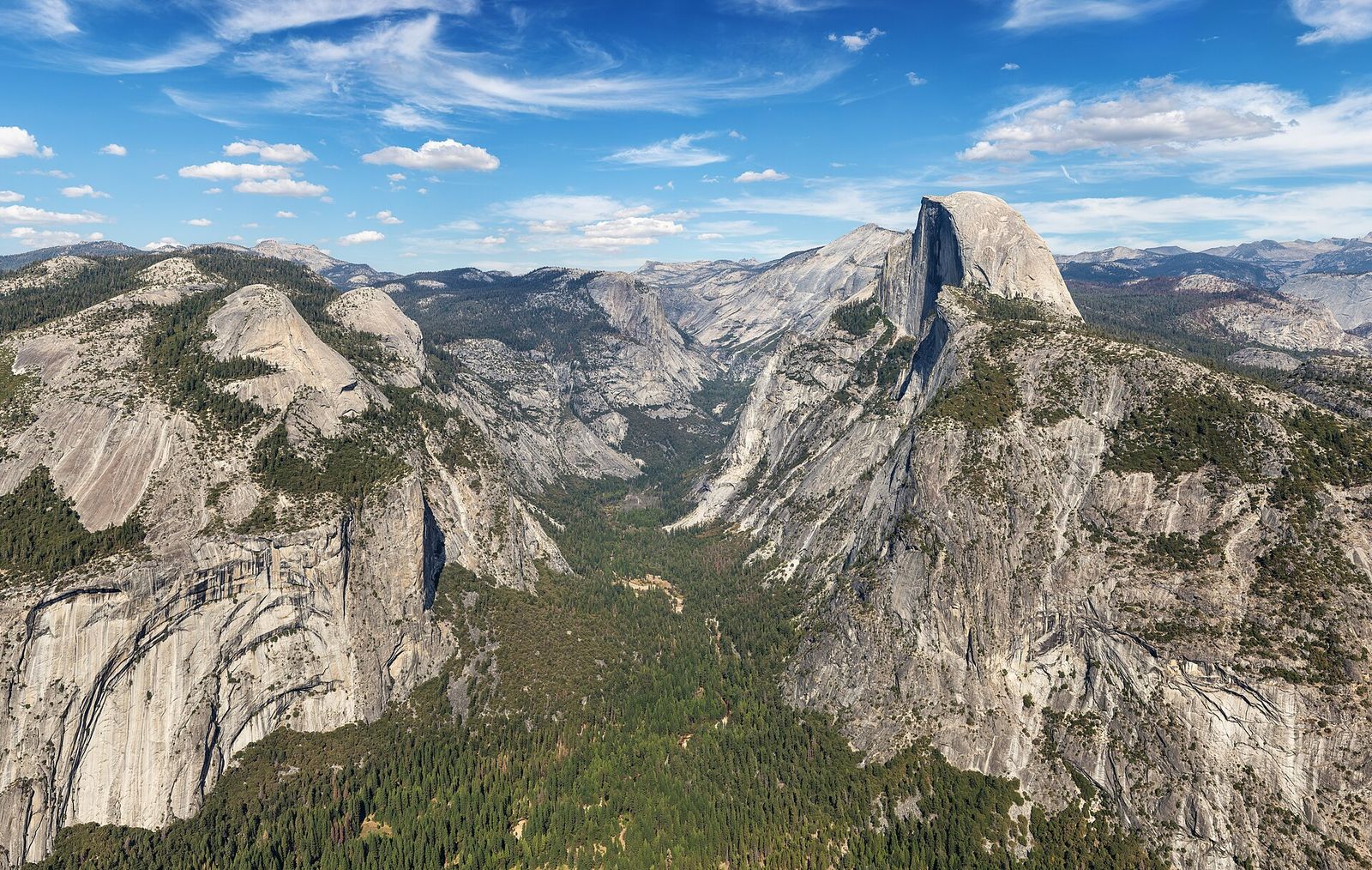
Yosemite Valley is small enough to be genuinely walkable, unusual for a park this famous. El Capitan and Half Dome frame a flat valley floor along the Merced River, and a free shuttle loop lets you leave the car at the day-use lot and spend two or three days on Yosemite Falls, Mirror Lake and the base of El Capitan on foot or by bike rental. The valley gets crowded in summer, and a reservation system for peak-season vehicle entry has been used in recent years; check current requirements before driving up from Fresno or Merced, the two main approach towns from the west.
The part of Yosemite that a lot of first-time visitors miss is Tioga Road, the high-country route that climbs east through Tuolumne Meadows toward Mono Lake and the town of Lee Vining. It typically only opens from late May or June through October or November, closed the rest of the year by snow, and it is where the park's alpine character shows itself, granite domes, subalpine meadows and trailheads with far fewer people than the valley floor. A trip of four to five days lets you split time between the valley and a day or two up on Tioga Road, ideally with a night at Tuolumne Meadows if the campground is open.
Calgary is the airport for both parks, and the drive west from the city into Banff National Park takes under two hours, with the peaks of the Canadian Rockies rising abruptly out of the prairie in a way that still surprises people who have seen the photos beforehand. Banff townsite makes a comfortable base for two or three nights, close to Lake Louise and Moraine Lake, both of which now use shuttle or reservation systems during peak summer months since parking at either lake has effectively become unworkable on a good-weather day.
The Icefields Parkway connects Banff to Jasper National Park over roughly 230 kilometres, a drive worth building a full day around rather than treating as transit. The Columbia Icefield, with its retreating Athabasca Glacier visible from a short walk off the road, sits roughly at the midpoint, and Peyto Lake's overlook further south gives the turquoise-water view that glacial silt produces and photographs never quite capture. Jasper is quieter and less developed than Banff, good for wildlife along the Maligne Lake road. A full trip covering both parks, with the drive between them, is comfortable at seven to eight days; anything shorter forces a choice between the lakes and the parkway.
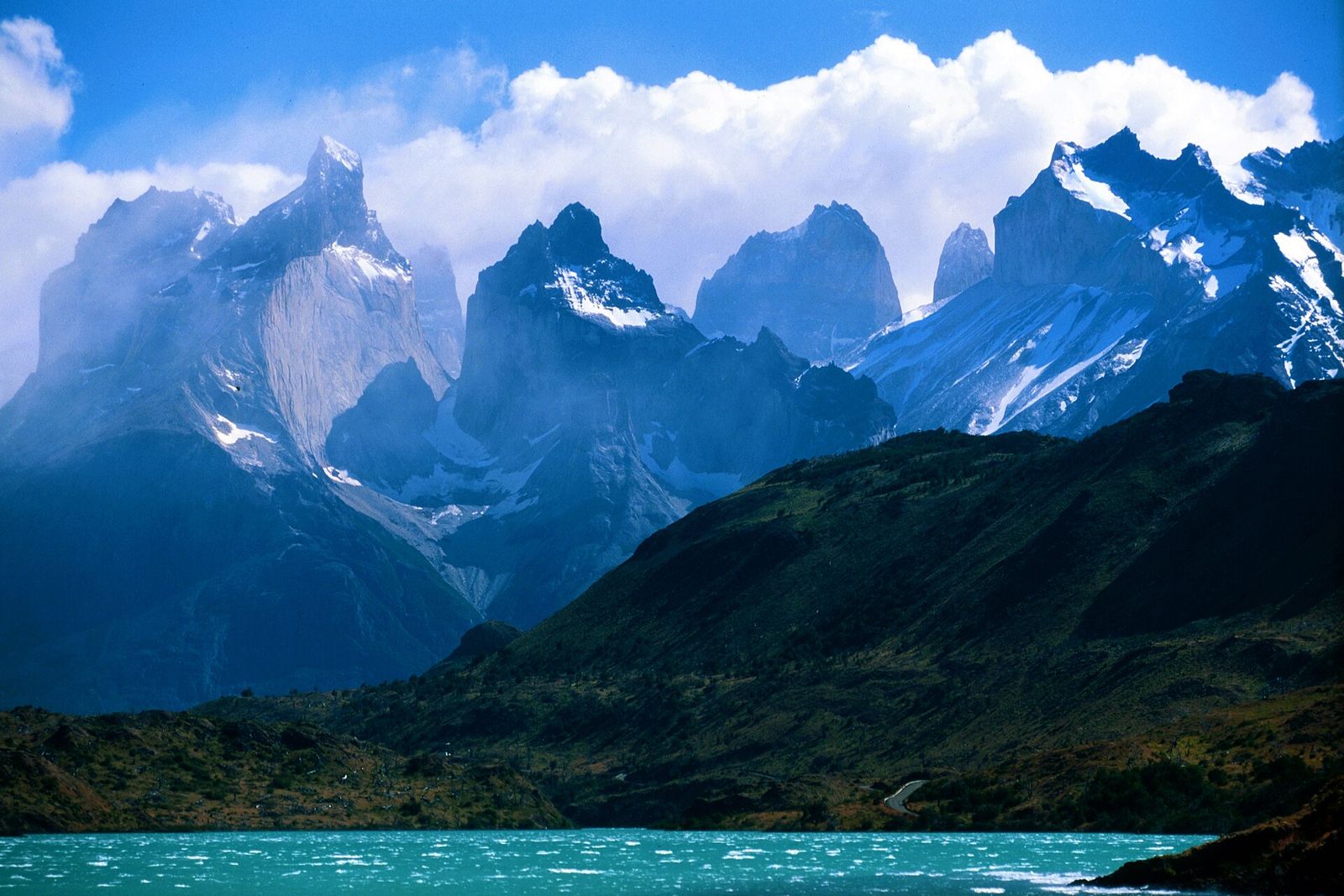
Getting to Torres del Paine in southern Chile means flying into Punta Arenas, then a bus roughly three hours north to Puerto Natales, the park's real gateway and gear-rental hub, followed by another couple of hours by shuttle to the entrance. The landscape is granite towers and horns rising almost vertically out of Patagonian steppe, with glacial lakes in improbable blue and green fed by ice off the Southern Patagonian Ice Field.
The W trek, named for the shape it traces on the map, is the standard way to see the park properly, typically four to five days covering the base of the towers, the French Valley and Grey Glacier, staying in a mix of refugios and campsites along the route. Refugio beds and campsite spots inside the park now require advance booking through the park's authorised operators, sometimes months ahead for the December to February high season, and this has become the single biggest planning constraint for anyone hoping to do the W or the longer O circuit. Patagonian wind is a genuine hazard, not just an inconvenience, capable of knocking hikers off balance on exposed sections, so shoulder-season visitors in October or April should expect a real chance of trail closures.
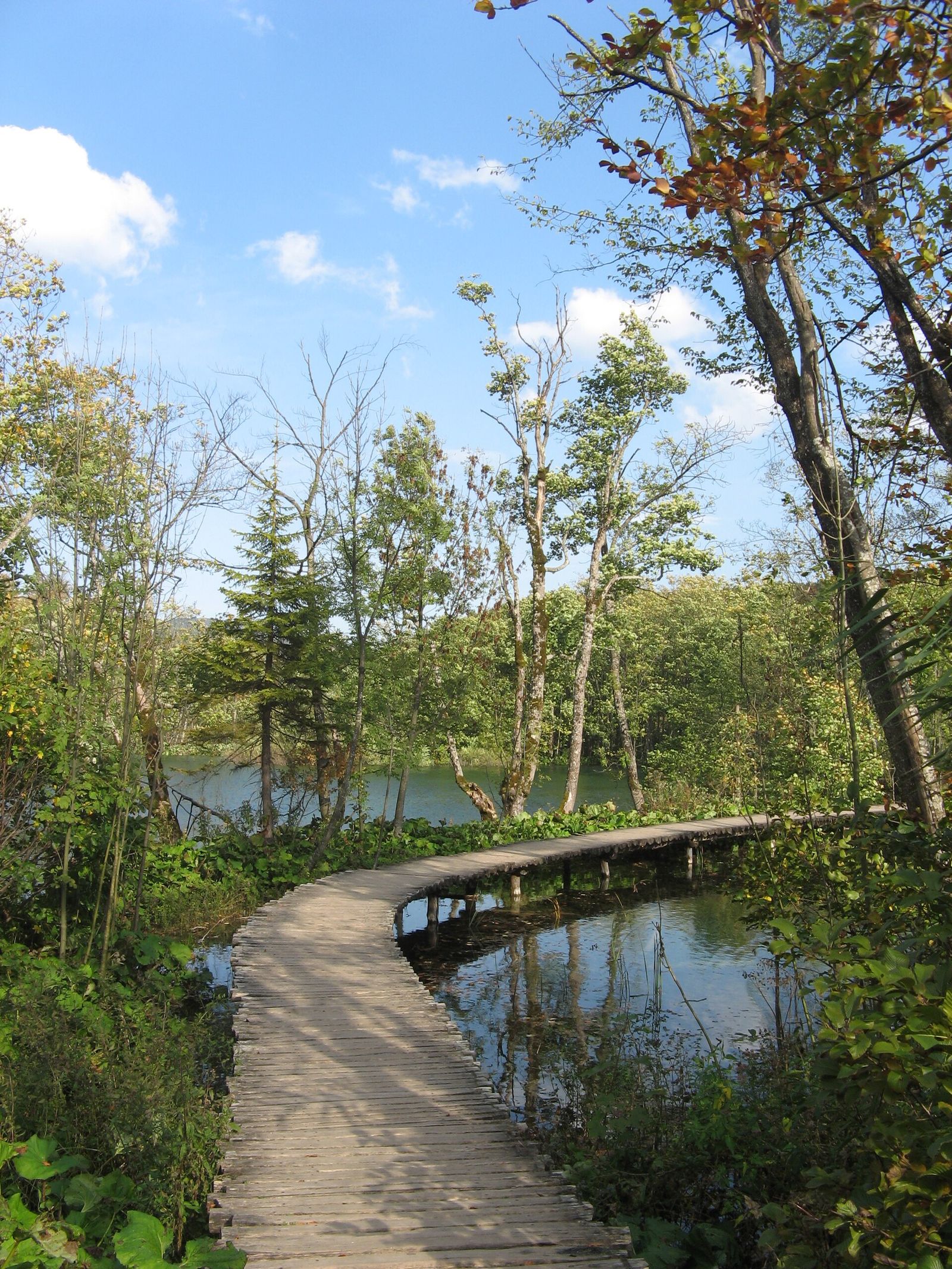
Plitvice sits roughly midway between Zagreb and Zadar, reachable by bus from either in about two to two and a half hours, which makes it a workable stop on a route through Croatia rather than a dedicated expedition. The park is built around sixteen turquoise lakes stepping down through travertine barriers, connected by waterfalls and threaded together by wooden boardwalks that keep visitors above the water without a car in sight anywhere in the core area. One full day covers the main lower and upper lakes loop; two days lets you add a boat crossing on Kozjak, the largest lake, and a slower pace through the less-visited upper trails.
Entry tickets are sold in timed slots and the park caps daily visitor numbers, a policy introduced after the boardwalks became badly overcrowded in peak summer. Booking a few days ahead in July and August is sensible; outside those months you can often buy on arrival. Late spring brings the fullest waterfalls after snowmelt, while autumn turns the surrounding beech forest into a rust-and-gold backdrop that a lot of photographers actually prefer to the summer green.
Kruger National Park in South Africa is unusual because you can drive yourself through Big Five territory on well-maintained tar and gravel roads, staying in South African National Parks rest camps like Skukuza or Satara. Kruger Mpumalanga International Airport, near Nelspruit (also called Mbombela), sits close to the southern gates and is the most convenient entry point; Johannesburg is a further option with a longer drive in. Self-driving is cheaper and gives total control over pace, but means spotting game without a guide's trained eye, and camp gates lock at sunset, limiting the early evening and night viewing predators favour.
Private lodges bordering the park, many in reserves like Sabi Sand, offer open-vehicle game drives with experienced trackers, night drives, and a level of sighting quality that is hard to match from a rental sedan on public roads. They cost considerably more but suit travellers with limited time who want the highest odds of seeing lion, leopard, elephant, buffalo and rhino in a short stay. A week split between two or three nights self-driving in the public park and two or three nights at a private lodge gives a reasonable sense of both. May through September, the dry winter months, concentrate wildlife around rivers and waterholes and make sightings noticeably easier than in the lush, hard-to-see wet season from November to March.
Fiordland National Park, on New Zealand's South Island, is most often visited as a day trip from Queenstown or Te Anau to Milford Sound, a four to five hour round trip including the Homer Tunnel cut through solid rock. That trip is worth doing, but it undersells the park. Staying a night in Te Anau and taking an overnight cruise on Doubtful Sound, reached by boat and bus rather than a direct road, gives a quieter version of the same fiord scenery, with waterfalls dropping into the sea from cliffs draped in rainforest.
Weather here changes fast and rainfall is heavy even by New Zealand standards, which locals will tell you is exactly what makes the waterfalls so dramatic after a downpour. Booking Milford or Doubtful Sound cruises ahead during the busy December to February summer is worthwhile, since capacity on the water is limited and popular sailings fill.
The common thread across all of these places is that the park itself should set the shape of your itinerary rather than being squeezed into the gaps of a wider country tour. That means checking permit and reservation systems early since several of these parks, Yosemite, Torres del Paine and Plitvice among them, have added capped entry or booked accommodation in the past few years and can sell out during peak months. It also means being honest about season: an Icefields Parkway trip in January or a Torres del Paine hike in July looks nothing like the postcard version, snow and closures reshape the experience entirely.
None of this needs to feel like a bureaucratic obstacle course. It is closer to booking a good restaurant: a bit of advance planning gets you the table by the window instead of the one by the kitchen door. Pairing park research with broader questions of how to build a realistic travel budget and how to plan a trip without overpacking the schedule will save you from the common mistake of trying to see Yellowstone's entire figure-eight loop in a single overambitious day.
If you are weighing several of these parks against each other for a single big trip, it is worth reading around national parks more broadly and comparing them against slower alternatives, since a park built for multi-day treks like Torres del Paine suits a very different traveller than one built for a scenic drive like the Icefields Parkway. For international logistics once you have picked a park, our notes on airport connections and travel documents, visas and passport requirements are worth a look well before departure, particularly for a multi-country trip that strings together Banff, Torres del Paine or Kruger with other stops.
The parks that reward a dedicated trip are, almost without exception, the ones with some friction built in: a road that only opens for five months, a trek that needs booking a season ahead, a wind that can stop you in your tracks. That friction is not a design flaw. It is what keeps Lamar Valley from looking like a highway rest stop and keeps the towers of Torres del Paine from being ringed with souvenir stalls. Building a trip around one of these places, rather than squeezing it into a country-wide itinerary, is really an argument for treating a national park as a destination in its own right, worth the same research and patience you would give a capital city.
What To See
Where to stand so that a famous landmark still surprises you.
8 min read
What To See
Old cities that remain working cities, and how to visit them respectfully.
8 min read
What To See
Coastal routes best measured in ferry timetables rather than kilometres.
9 min read