What To See
Ancient Cities That Still Feel Lived In
Old cities that remain working cities, and how to visit them respectfully.
By Marta Solberg · 12 June 2026 · 8 min read
What To See
Old cities that remain working cities, and how to visit them respectfully.
By Marta Solberg · 12 June 2026 · 8 min read
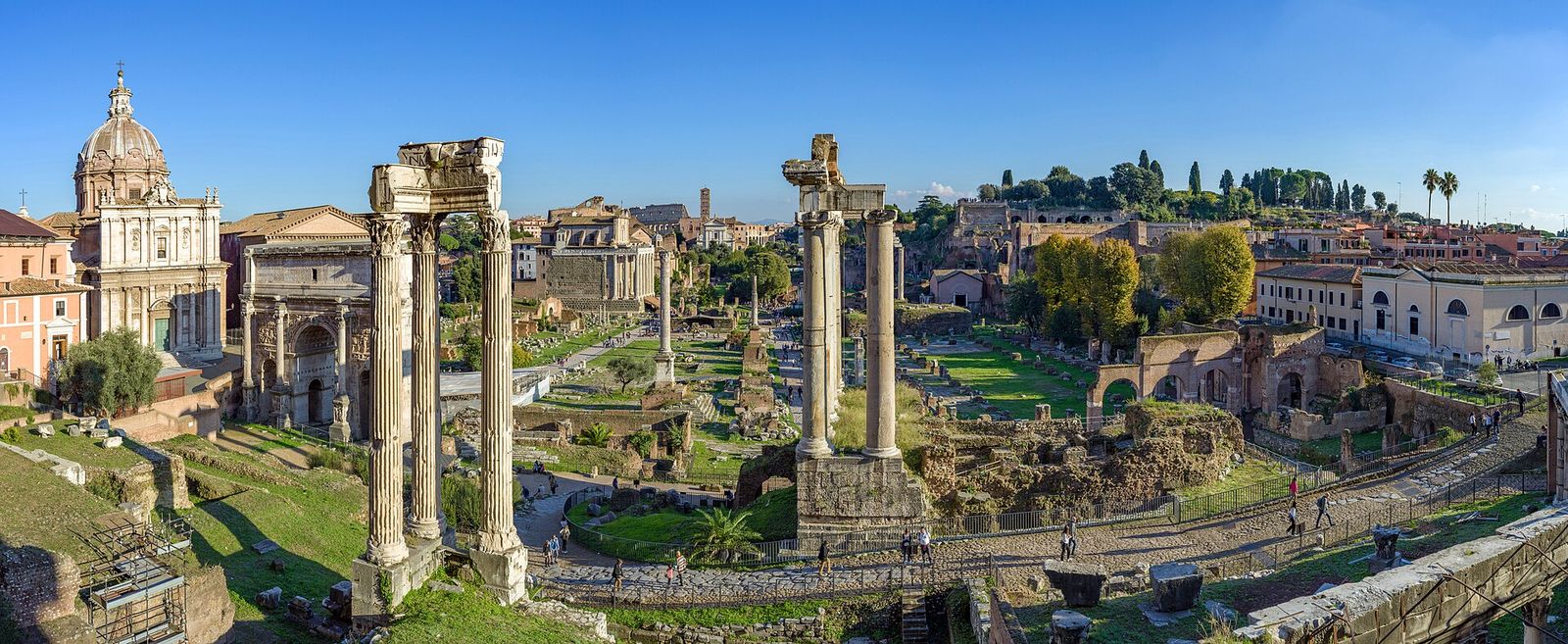
Some ancient cities have been turned into museums with a ticket booth at the gate. Others have kept the museum part but never stopped being a city, so laundry still hangs over the same alleys the Romans or Byzantines or Ottomans walked, and someone is still selling vegetables on a corner that has sold vegetables for a thousand years. The following places belong to the second category. Ruins matter here, but so does the woman airing her bedding from a third-floor window above them, and that overlap is the whole reason to visit.
Trastevere, on the west bank of the Tiber, is the neighborhood where Rome's ancient-and-lived-in quality is easiest to feel immediately. Narrow cobbled streets, ochre buildings with peeling shutters, laundry lines strung between windows, and at ground level a density of small trattorias that still cook for their own neighborhood as much as for visitors. It gets crowded at night, particularly around Piazza di Santa Maria in Trastevere, so an early evening walk before the bars fill up shows you the quieter, more residential side, older couples on folding chairs outside doorways, kids kicking a ball against a church wall that has stood since the twelfth century.
Testaccio, just south, is less picturesque and more honest. It grew up around Rome's old slaughterhouse and river port, and it remains the neighborhood locals point to when asked where to find real Roman cooking, offal-heavy dishes like coda alla vaccinara served in trattorias that have not redecorated in decades. Monte Testaccio itself is a hill made almost entirely of broken ancient amphorae, discarded olive oil containers stacked up over centuries until they became a small mountain, now ringed by clubs and bars built into its base. Nowhere else does the ancient and the ordinary literally form the same pile of rubble.
Largo di Torre Argentina sits in between, a sunken square of Republican-era temple ruins right in the middle of traffic, most famous now as the site where Julius Caesar was killed and, more recently, as a cat sanctuary run by volunteers. Office workers eat lunch on benches overlooking the ruins without a second glance, which is the point. Two or three days is enough to move between these neighborhoods on foot, and going in spring or late autumn keeps the heat and crowds down.
Plaka, tucked beneath the north slope of the Acropolis, is the oldest continuously inhabited district of Athens, and it shows in the tangle of pedestrian lanes, neoclassical houses, and small Byzantine churches wedged between souvenir shops. Above it, Anafiotika is a genuinely surprising pocket: a cluster of whitewashed, blue-shuttered houses built in the 1800s by stonemasons from the island of Anafi who came to work on the new royal palace, and it still looks and feels like a Cycladic village stapled onto a hillside in the middle of a European capital, cats sleeping on doorsteps, bougainvillea over low walls, laundry strung between houses that are barely wide enough for two people to pass.
Monastiraki, at the base of Plaka, is where the ancient world gets loudest and most commercial, a flea market square backed directly onto the Roman Agora and, further on, the Ancient Agora where Socrates once argued philosophy. Go early on a Sunday morning for the flea market at its most authentic, before the tourist stalls fully open, and climb up to Anafiotika in the late afternoon when the light turns the whitewashed walls gold and the day-trip crowds have thinned. Two full days lets you cover the Acropolis itself along with these surrounding layers without rushing.
Fatih, the historic peninsula that gives Istanbul's old city its name, holds Hagia Sophia, the Blue Mosque, and the Grand Bazaar, but it is also a dense, working-class, deeply conservative district where daily prayer calls structure the rhythm of the streets far more than any tour schedule does. Balat, along the Golden Horn a bit further out, was historically Istanbul's Jewish quarter and remains a patchwork of colorful, crumbling Ottoman-era houses, many now restored as cafes and small shops, though plenty are still simply homes with children playing football on the steep stepped streets. Kadikoy, across the Bosphorus on the Asian side, feels like a different city again, a lively market district of fishmongers, meyhanes, and record shops, best reached by the short ferry from Eminonu, which is itself one of the great cheap experiences in the city, cutting across the strait with tea sold from a cart on deck.
A useful pattern is to spend mornings in Fatih for the major monuments, when the lines for Hagia Sophia and Topkapi Palace are shortest, afternoons wandering Balat's side streets before the light goes, and an evening ferry over to Kadikoy for dinner among people who live there rather than visit. Four or five days lets all three register as distinct rather than blurring into one impression of the city.
The Old City of Jerusalem is divided, by long tradition rather than any formal boundary, into Christian, Muslim, Jewish, and Armenian quarters, each with its own market streets, religious sites, and daily rhythm. The Muslim Quarter's souq is the busiest and most commercial stretch, spices and pastries and cheap goods stacked under vaulted stone ceilings. The Jewish Quarter, largely rebuilt after 1967, is quieter and more orderly, centered on the plaza before the Western Wall. The Christian Quarter holds the Church of the Holy Sepulchre, and the small Armenian Quarter, the least visited of the four, is worth the detour for its calm courtyards and centuries-old convent walls. Visiting respectfully here means moving slowly, dressing modestly, being aware of religious schedules such as Friday prayers and the Jewish Sabbath, and accepting that this is, before anything else, a place where people live and worship, not a backdrop. A single focused day covers the highlights, but two allows the quieter corners to register.
Gion, on the east bank of the Kamo River, is Kyoto's best-known geisha district, a grid of wooden machiya townhouses, teahouses, and narrow lanes where, with some luck around dusk, you might see a geiko or maiko hurrying between appointments in full dress. The area works best in early morning or early evening, since midday brings heavy foot traffic and, in recent years, some streets have restricted photography to protect residents' privacy, a reminder that this is a functioning community rather than a stage set.
A short walk away, Nishiki Market, a narrow covered arcade nicknamed Kyoto's kitchen, has supplied local households with pickles, tofu, dried fish, and knives for over four hundred years, and it remains as much a place where residents do their actual shopping as it is a food-tourism destination. Pair a morning at Nishiki with an afternoon in Gion's quieter backstreets, away from the main Hanamikoji Street, and add a visit to nearby Fushimi Inari or the Philosopher's Path if time allows. Three or four days suits Kyoto well, since its temples and neighborhoods reward unhurried mornings before the day-trip crowds from Osaka arrive.
Toledo, perched on a granite outcrop above a bend in the Tajo River south of Madrid, was for centuries a place where Muslim, Jewish, and Christian communities lived within the same walls, and the layered result, a mosque converted to a church, a synagogue tucked among Christian chapels, narrow medieval lanes barely wide enough for a car, still functions as an ordinary if small Spanish city, with residents doing their shopping past the same monuments that draw day-trippers from the capital. Staying one night rather than treating it as a day trip changes everything, since after the last tour buses leave for Madrid in late afternoon, the streets empty into something closer to what Toledo actually is the rest of the time.
Matera, in the southern Italian region of Basilicata, is the most startling example on this list. Its Sassi, cave dwellings carved directly into limestone ravines and inhabited more or less continuously since prehistoric times, were considered a national disgrace in the mid twentieth century, overcrowded and lacking basic sanitation, and the population was forcibly relocated in the 1950s. Decades of restoration later, many of those same caves are homes, boutique hotels, and restaurants again, and Matera has the strange distinction of being a city that was declared unfit to live in and then quietly, deliberately, moved back into. Walking the Sasso Caveoso and Sasso Barisano districts at dawn, before tour groups arrive, when the honey-colored stone catches low sun and a handful of residents are opening shutters for the day, is as close as this list comes to watching an ancient city wake up.
What connects these places is not their age so much as their refusal to become static. A ruin behind glass tells you what a civilization built. A ruin with a grocery stall next to it, a child's bicycle leaning against a Roman wall, or a geisha late for an appointment slipping past a temple gate, tells you that the story never actually finished. If this kind of layered, walkable travel appeals to you, our guides on culture-focused city breaks around Europe and how to choose the right neighborhood in a new city build on the same idea, and for the practical side of stitching a multi-stop trip like this together, see how to plan a multi-city international trip and train travel across Europe if Rome, Athens, and Istanbul are all on the itinerary.
What To See
Where to stand so that a famous landmark still surprises you.
8 min read
What To See
Parks that deserve more than a day trip, with notes on seasons and permits.
10 min read
What To See
Coastal routes best measured in ferry timetables rather than kilometres.
9 min read