Before You Go
Travel Documents, Visas And Passport Requirements Explained
Validity rules, entry stamps, transit visas and the six-month question.
By Thomas Bergeron · 27 May 2026 · 9 min read
Before You Go
Validity rules, entry stamps, transit visas and the six-month question.
By Thomas Bergeron · 27 May 2026 · 9 min read
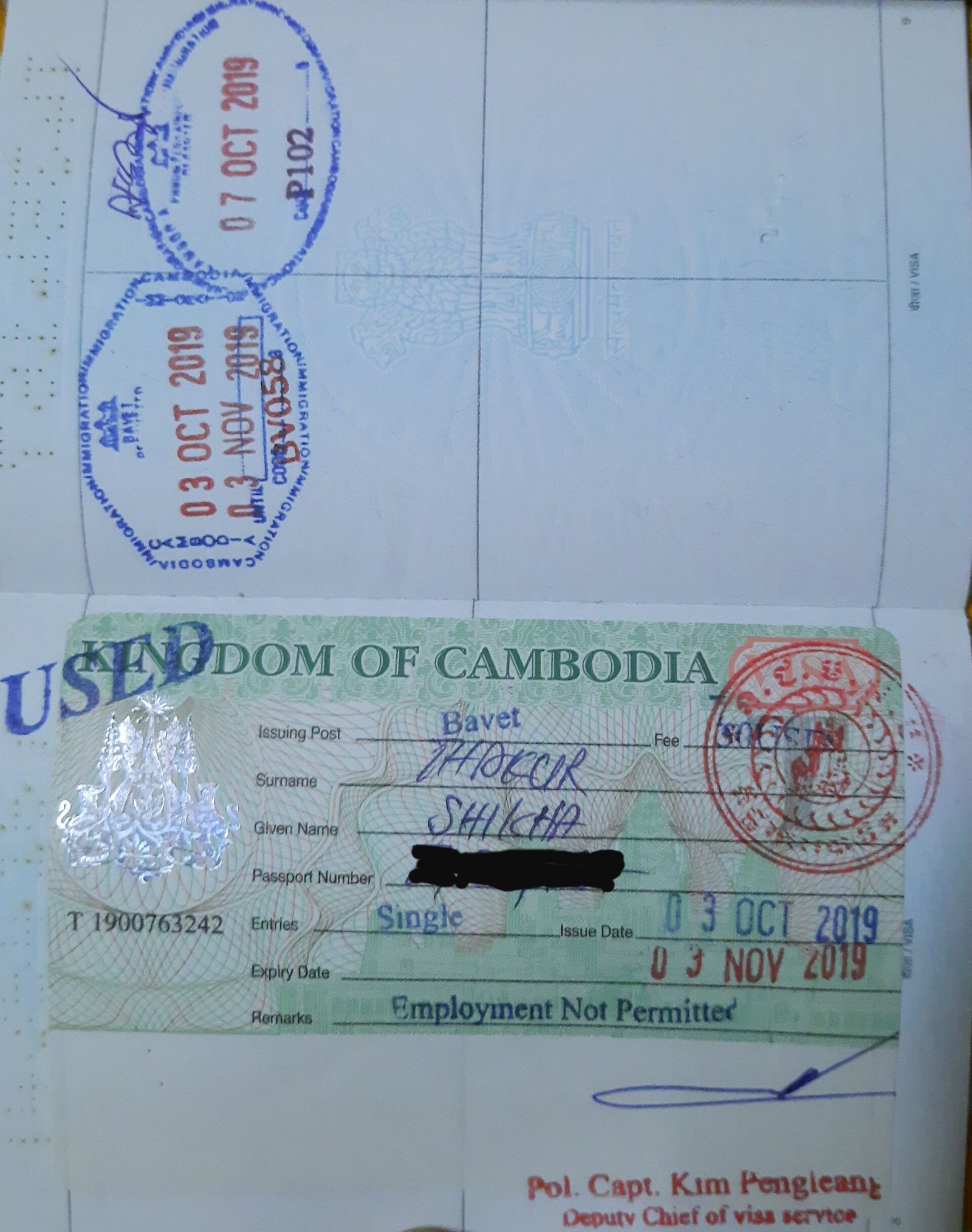
Every international trip rests on a stack of paperwork that most travelers only think about twice: once when booking, and once at check-in when an airline agent asks to see a passport. The gap between those two moments is where trips go wrong. Airlines are contractually required to deny boarding to passengers who do not meet the destination's entry rules, and they will not refund a ticket because a passport expired six weeks too early or a visa application took longer than expected. None of this is exotic knowledge. It is a short list of categories, and once you understand the categories, checking any specific trip becomes a fifteen-minute task rather than a source of anxiety.
A large number of countries will not admit a traveler whose passport expires within six months of the planned departure date, even if the visit itself is only a week long. This rule did not originate with any single treaty; it spread as a common practice among immigration authorities, largely because it gives a buffer in case a trip is extended or a return is delayed. The important thing for a reader to understand is that six months is a widely applied convention, not a universal law, and some countries apply three months, or simply require validity through the length of stay. Treat six months beyond your return date as the safe planning assumption, and confirm the actual figure for your specific destination on its official immigration or foreign ministry website before booking anything nonrefundable.
A passport does not need to be lost to become a problem. Water damage, a torn cover, a chip that no longer scans, or pages that have separated from the binding can all be grounds for refusal at check-in or at a border desk, because the document is judged to no longer be a reliable proof of identity. If your passport looks rough, renew it before a trip rather than after. Renewal processing times vary by issuing country and by season, and expedited services usually cost extra, so this is worth checking well ahead of departure rather than the week before a flight.
Some immigration systems still use full-page stamps rather than compact ink marks, and a number of countries require a minimum of two, sometimes four, entirely blank visa pages, not just blank space at the bottom of a used page. This has become less common as more countries move to digital entry records, but it has not disappeared, and it catches out travelers whose passports are otherwise valid but simply full from years of stamps. If you travel frequently and your passport book is filling up, check the blank-page requirement for your next destination specifically, since assuming your passport is fine because it has 'some space left' is one of the more avoidable ways to be turned back at a gate.
A visa is government permission to enter, and it comes in several distinct forms that get used interchangeably in casual conversation but work quite differently in practice. A visa on arrival is issued at the border itself, usually against a fee paid in cash or by card, and typically requires a passport photo and sometimes proof of onward travel. An e-visa is applied for and approved online before departure, generating a document you print or carry digitally, and it has become the norm for countries such as India and Turkey for many nationalities, replacing what used to be embassy visits. A full embassy or consular visa application is the most involved route, often requiring an in-person appointment, biometric fingerprints, and sometimes an interview, and it remains standard for longer stays, work purposes, or nationalities not covered by simpler schemes. None of these categories is fixed for a given country forever; the same destination can shift a nationality from embassy visa to e-visa, or introduce a new online system, in the space of a few years, so checking the current pathway for your specific passport rather than relying on what a friend did last year matters.
A separate and increasingly common category is the electronic travel authorisation, which is not a visa in the legal sense but a pre-screening system for travelers who are otherwise visa-exempt. The United States' ESTA, used by nationals of visa waiver program countries, is the best-known example: it does not grant a right of entry, only pre-clearance to board a flight, with the final decision still made by a border officer on arrival. The United Kingdom has introduced its own electronic travel authorisation for a similar function, expanding over time to cover more nationalities. These systems are usually cheap, quick, and valid for multiple entries over a year or two, but they still need to be applied for before departure, and airlines increasingly check for them at check-in the same way they check for visas. If you are researching one of these schemes, before you go is a reasonable place to build a checklist that includes it alongside insurance and vaccinations.
Connecting through a third country can trigger its own entry requirements, and the deciding factor is usually whether you stay airside or have to clear immigration. A same-terminal, same-airline connection that never requires collecting checked bags is often exempt from visa requirements even for countries that would otherwise require one, under what is usually called an airside or direct transit exemption. But a change of terminal, a change of airline that requires re-checking bags, an overnight layover, or simply a long enough gap that the airport wants passengers to leave security can all mean you are legally entering the country, with the full visa requirement attached. Dubai, Singapore and Istanbul are common hubs where this distinction matters in practice, and each has published its own transit rules that should be checked against your specific itinerary and passport, not assumed from a previous trip through the same airport, since transit policies do get revised. This is one of the more useful things to plan around when you are building a multi-city international trip, since a poorly timed connection can turn a two-hour layover into an unplanned visa application.
Immigration officers in a number of countries can ask to see a return or onward ticket, and sometimes proof of where you are staying, before stamping you in, on the reasoning that a visitor should have a plan to leave. This is inconsistently enforced and depends heavily on the officer and the day, which makes it worse to gamble on rather than better; travelers on one-way tickets, especially into countries with strict tourist-visa enforcement, have been denied boarding by the airline itself, well before reaching the destination's border. A cheap fully refundable onward flight, or a booked but cancellable train ticket to the next country, is usually enough to satisfy this requirement without committing to a fixed plan.
The Schengen area's short-stay rule allows most visa-exempt visitors up to 90 days within any rolling 180-day period, across all Schengen countries combined, not per country. The rolling window is the part that confuses people: it is not a calendar quarter, it is calculated by looking back 180 days from any given date and counting how many of those days you were physically present in the Schengen zone. As a worked example, a traveler who spent 40 days in Spain and France in March and April, then returns for another 40-day trip in July, needs to count backward from each day of the July trip to make sure the total for the trailing 180 days does not exceed 90. Several online Schengen calculators exist for this exact purpose, and it is worth running your itinerary through one if you are combining Schengen countries with, say, train travel across Europe over several months, since overstaying even by a few days can lead to an entry ban on future visits.
Children need their own passports in almost every country now; being listed on a parent's passport stopped being an option in most jurisdictions years ago. Beyond that, a number of countries ask for extra documentation when a minor is traveling with only one parent, or with neither parent, commonly a notarized consent letter from the absent parent or legal guardian. This is inconsistently checked, but it has been enforced strictly enough at some borders, South Africa being a frequently cited example historically, that it is worth preparing regardless of whether you expect to be asked. If custody arrangements are complex, checking the destination country's specific requirement, and carrying supporting legal paperwork, is worth the extra time before departure.
Japan's short-stay entry for many nationalities has historically been visa-free for tourism up to 90 days, without a formal e-visa, though online arrival procedures have been introduced for immigration and customs forms. India moved most tourist visa processing to an e-visa system years ago, with a fee and a short online application replacing most embassy visits for eligible nationalities. Turkey runs its own separate e-visa portal for many nationalities, and applying is meant to be done only through the official government site, since third-party sites charging inflated fees for the same service are a persistent problem. Brazil has changed its reciprocity-based visa policy for US, Canadian and Australian travelers more than once in recent years, alternately requiring and waiving visas depending on the political relationship at the time, which makes it one of the clearest examples of why a rule that was accurate two years ago cannot be assumed to still apply. None of these should be read as current instructions; they are illustrations of how different systems are structured, and each needs to be checked against the destination government's own website within weeks, not months, of departure.
The unifying thread across all of this is that entry requirements are administrative decisions made by individual governments, and governments revise them in response to security concerns, diplomatic relationships and simple bureaucratic modernization. A rule that held for a decade can change with a single policy announcement, and a system that looks permanent, like the US ESTA or the UK's electronic travel authorisation, is itself relatively young and continues to be adjusted in scope and price. Building document checks into your travel planning routine the same way you check flight times, rather than treating it as a one-time lookup, is the difference between a trip that goes smoothly and one that ends at a check-in desk.

Before booking anything nonrefundable, read the destination's official government or consular page for your specific nationality, and separately check your airline's own travel document policy, since carriers sometimes apply stricter interpretations than the letter of the law to avoid fines for carrying improperly documented passengers. If your trip involves several countries in sequence, work through the requirements for each leg individually rather than assuming that meeting one country's rules covers the next; common mistakes first-time international travelers make is a useful companion read for exactly this kind of oversight, and pairing it with a broader before you go checklist keeps documentation from being an afterthought squeezed into the final week.

Before You Go
A four-week countdown covering documents, health, money and the house you leave behind.
7 min read

Before You Go
Which card to carry, when cash still wins and how to refuse a bad conversion.
8 min read

Before You Go
Roaming, local SIMs and eSIMs compared, plus what to set up before you fly.
8 min read