Events & Experiences
Burning Man Travel Guide: What First-Time Visitors Should Know
Tickets, logistics, water and the practical reality of a week in the desert.
By Aisha Nakamura · 22 March 2026 · 7 min read
Events & Experiences
Tickets, logistics, water and the practical reality of a week in the desert.
By Aisha Nakamura · 22 March 2026 · 7 min read
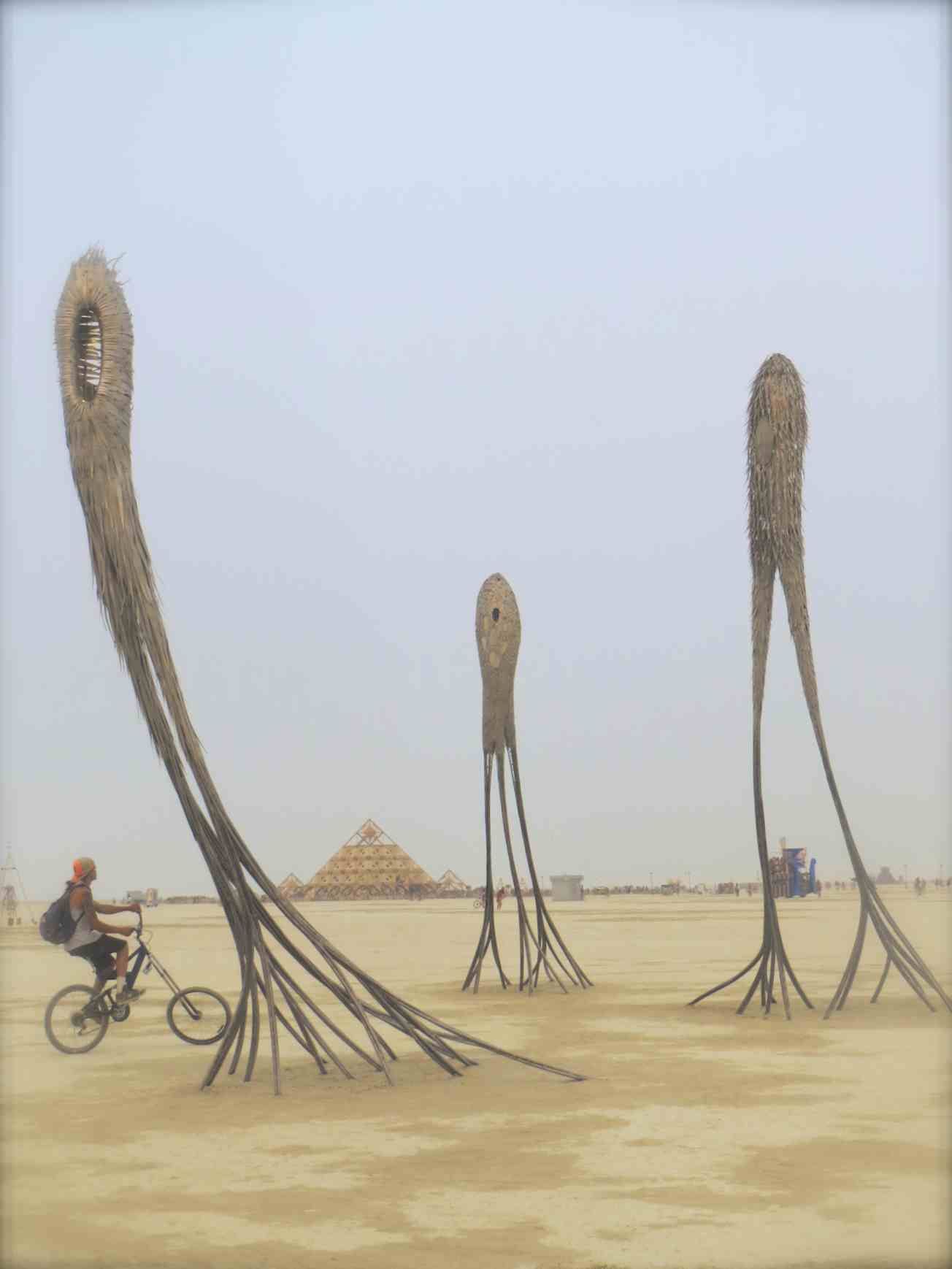
Burning Man happens on the Black Rock Desert playa in northern Nevada, roughly two hours north of Reno, and building a temporary city there for a week is a logistical undertaking closer to expedition planning than to a normal festival trip. This guide is deliberately unglamorous. It covers what a first-time attendee, generally called a first-year or a virgin in event terminology, needs to plan for to arrive prepared, and it is honest about how physically demanding the environment actually is.
Almost everyone flies into Reno-Tahoe International Airport (RNO), which sits close enough to the event that it absorbs a large surge of traffic in the days before and after. From Reno, the drive north runs through Wadsworth and Nixon before reaching Gerlach on State Route 447, a small town that effectively becomes the last services stop before the playa entrance. Fuel, basic groceries and a last chance at cell signal all happen around Gerlach; past that point the road turns onto the playa itself and infrastructure disappears.
Gate queues are the part first-timers consistently underestimate. Arriving on the main entry days can mean sitting in a line of vehicles on the approach road for several hours, sometimes overnight, before reaching the gate, exit inspection and greeter stations. Arriving earlier or later in the week, and avoiding the first afternoon of the event, generally shortens this considerably. Bring enough water, food and patience for the wait itself as a matter of course, not as a contingency.
Tickets go on sale months ahead of the event through a structured process run by the Burning Man Project, typically involving a directed group sale first, followed by later sale phases, and a low-income ticket program. Exact dates, price tiers, and vehicle pass requirements change from year to year and should never be assumed to carry over from a previous edition. Check the official Burning Man Project website directly before making any plans, and treat any ticket offered outside that official channel with real suspicion. For the wider planning around building a trip around a single event, see major sporting events and how to plan a trip around them and music festivals around the world worth planning a trip around, both of which cover the same discipline of buying through official channels only.
Burning Man operates around ten principles, among them radical self-reliance, radical inclusion, gifting, decommodification, and leaving no trace. For a first-timer, the most operationally important of these is leave no trace, enforced through a strict standard against MOOP, matter out of place, meaning anything not naturally occurring on the playa: sequins, feathers, cigarette butts, food scraps, zip ties. Camps are expected to police their own footprint continuously, not just at strike, because loose glitter or fabric fragments blow across the open desert and are extremely difficult to recover afterward. Bringing feather-based costumes, hay, or confetti onto the playa is generally treated as a serious error by experienced participants, not a minor style choice.
A basic tent is not adequate shelter for a week on the playa. Daytime temperatures commonly run into the high 90s Fahrenheit (mid-30s Celsius) with direct, shadeless sun, and a tent without shade structure over it becomes unbearable by mid-morning. Most experienced campers build or bring a dedicated shade structure, often shared across a camp, engineered to handle dust storms and sustained wind gusts that can exceed 40 mph without warning. Any structure needs real staking and guying for the ground conditions, not the kind of light pegs sold with a typical car-camping tent, because a whiteout dust storm arriving at speed can flatten or launch anything under-secured.
Water planning is not optional and should not be improvised on arrival. A commonly cited baseline is roughly 1.5 gallons of drinking water per person per day, covering hydration, basic hygiene and cooking, and that figure climbs for anyone working outdoors or dancing through hot afternoons. There is no reliable resupply once the event fills the desert, so bringing a full week's water in from outside, along with a margin for guests or mistakes, is standard practice among returning attendees.
Food needs to survive daytime heat without refrigeration for at least stretches of the day, since ice is a limited and often expensive commodity trucked in and resold, and even a well-packed cooler struggles by the fourth or fifth day. Shelf-stable staples, dehydrated meals, and foods that do not spoil quickly in heat are the practical baseline, with ice reserved for the items that genuinely need it.
The playa surface itself is a fine alkaline dust, closer to a mineral clay than ordinary sand, and it is abrasive and drying to an extent that surprises most first-timers. It cracks skin, dries out sinuses, and works into camera gear, laptops and phone ports if they are left uncovered. Sealed bags or cases for electronics, a basic skincare routine including lotion and lip balm, and eye protection are treated as essentials rather than extras by anyone who has done it before.
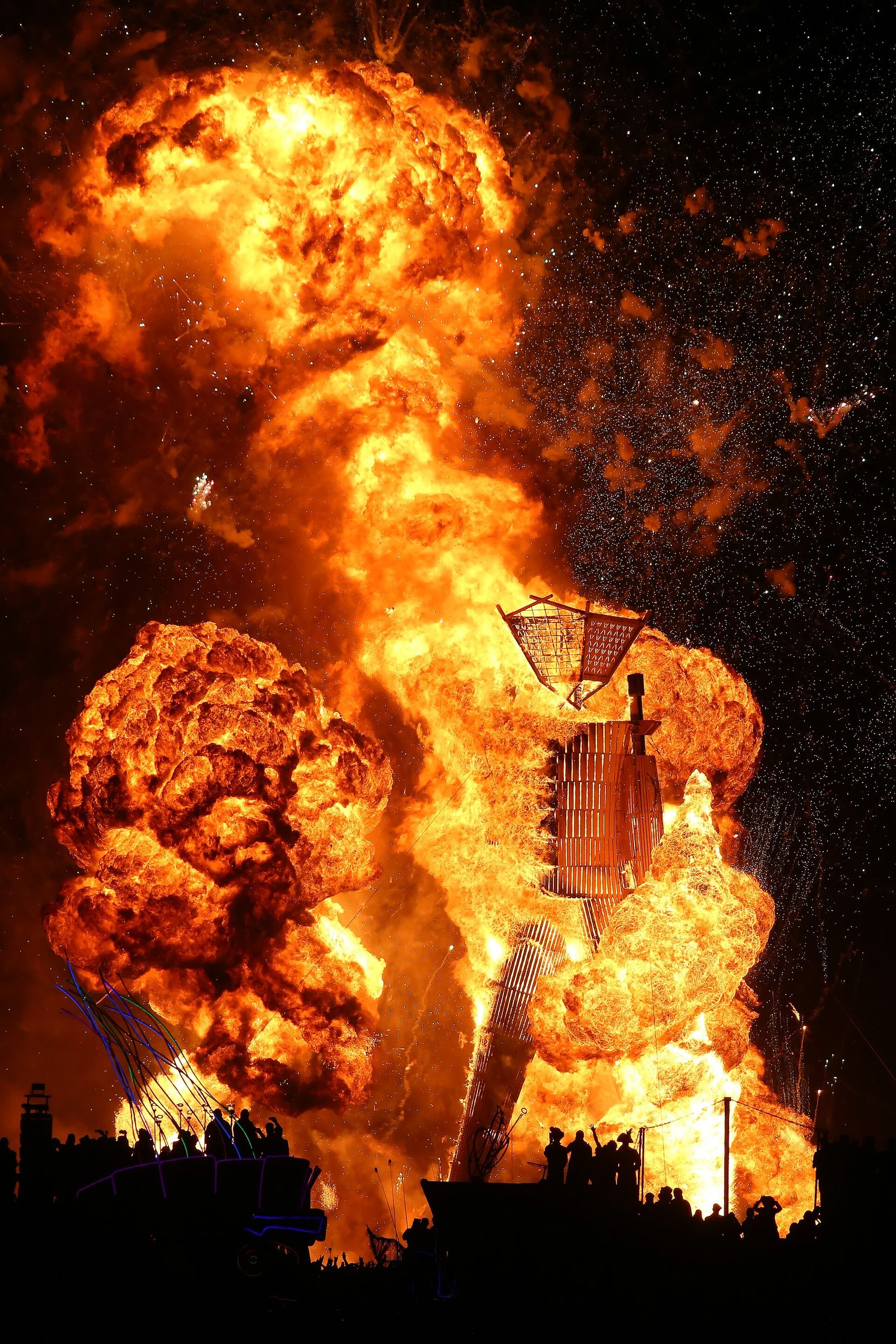
Goggles rated for dust, not just sunglasses, and an N95 or similar dust mask are standard kit, since visibility during a whiteout can drop to a few feet and breathing unfiltered dust for any length of time is genuinely unpleasant and potentially harmful. Temperatures swing hard between day and night: an afternoon in the high 90s can fall into the 40s Fahrenheit (single digits Celsius) after dark, so layered clothing, a proper sleeping bag rated well below the expected night low, and a real jacket matter as much as sun protection does during the day.
There is no municipal power or running water anywhere on site. Camps generate their own power, usually from solar setups or generators, and manage their own water entirely, including greywater from washing and cooking. Greywater cannot be dumped on the playa; the event's rules require it to be contained and hauled out, and most experienced camps plan a greywater evaporation or containment system as carefully as they plan drinking water. Bringing a plan for this, rather than discovering the rule on arrival, avoids both fines and avoidable mess.
The city itself is arranged in a rough arc several miles across, and a bicycle is the standard way to cover that distance, since walking between distant camps or out to the open playa art installations eats hours. Bikes need lights, ideally multiple, both for visibility in the open desert at night among slow-moving art cars and other cyclists, and because an unlit bike in a dust storm is close to invisible. A basic bike with wide, low-pressure tires tends to survive the dust and uneven ground better than anything delicate, and it is common for bikes to be effectively written off by the dust and left behind rather than transported home.
Mobile connectivity on the playa is close to nonexistent for most carriers most of the time; treat the week as offline and arrange with anyone at home accordingly rather than expecting to check messages daily. For the wider frame of building an ambitious trip around a demanding event or environment rather than a conventional holiday, adventure trips worth planning in advance and national parks worth building a trip around both cover similar planning discipline, even though neither is the same kind of environment.
None of this is meant to discourage a first visit, but going in without a genuine plan for water, shelter, dust and self-sufficiency is not a minor oversight in this environment; it is the difference between a demanding but manageable week and a genuinely unsafe one. Radical self-reliance is not a slogan here so much as an operating requirement, and treating the preparation with real seriousness is what makes the event survivable, let alone worthwhile.
Events & Experiences
Festivals whose cities and seasons justify the whole journey.
8 min read

Events & Experiences
Three very different carnivals, and what each asks of a visitor.
8 min read
Events & Experiences
Ballots, resale rules and booking a bed before the fixture list is published.
8 min read